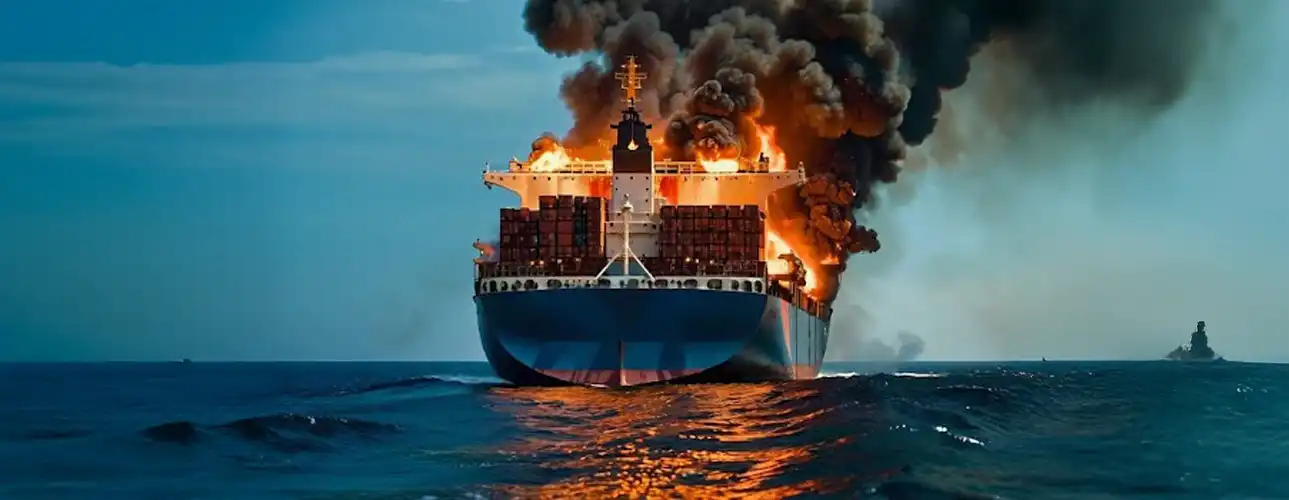


The $2 Million Lesson That Changed Shipping Forever
In 2021, a vessel off the coast of Sri Lanka caught fire, burning for 13 days. The carrier declared General Average, forcing every shipper—even those with intact cargo—to pay $12,000 per container just to access their goods.
Many had "all risk" policies but no GA coverage. They learned the hard way: cargo insurance myths aren’t academic—they’re bankruptcy risks.
Let’s dismantle three more myths that sink supply chains.er components to deteriorate.
The entire claim—both the production losses and the physical damage—is denied because the root cause was delay, an excluded peril.
Losses Typically Excluded Under the Delay Clause:
Consequential Losses: Lost sales, production line shutdowns, late delivery penalties.
Transit Costs: Demurrage, detention, and extra storage fees.
Physical Damage: Spoilage or degradation that results directly from the extended transit time.
How to Fight Back:
Delay in Start-Up (DSU) Insurance, a specialized policy for project cargo, protects against financial losses when critical components don't arrive on time.
IOT trackers to prove when damage occurred (pre-delay vs. during)
Myth 5: “Missing Cargo = Theft”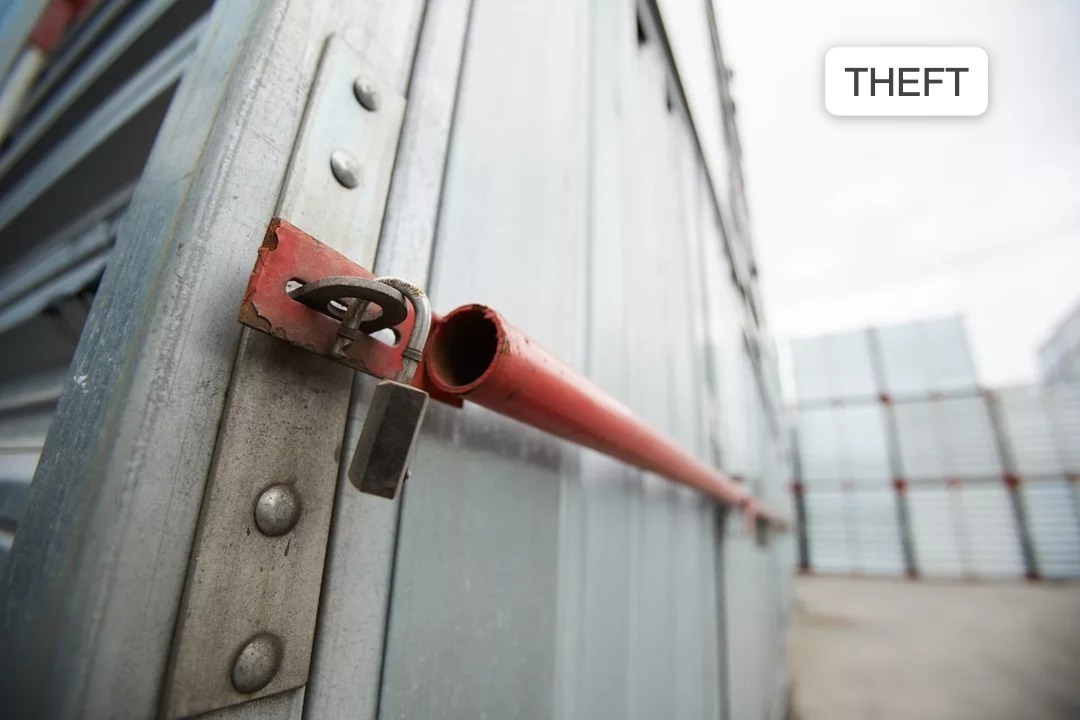

Reality: For Insurers, No Forced Entry Means No Theft Claim.
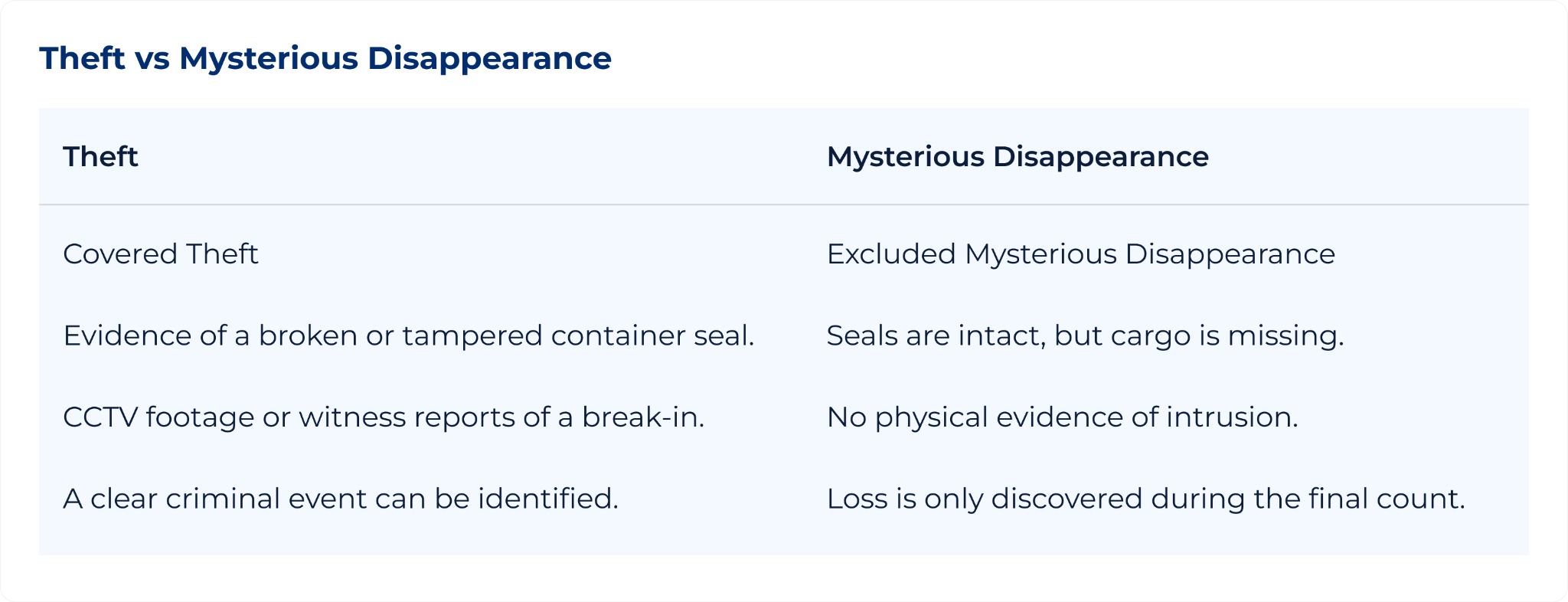
Insurance policies make a critical distinction between "theft" and "mysterious disappearance," two events with vastly different outcomes for your claim.
Theft requires evidence of a criminal act, like a broken seal or forced entry. It is generally covered.
Mysterious Disappearance is when cargo vanishes from a sealed, intact container. This is often excluded or subject to a high deductible because it points toward internal errors (like miscounting at origin) rather than an external crime.
The $800,000 Vanishing Act
A sealed container of iPhones arrived in Rotterdam weighing 50% less than it should. With no cut locks or signs of tampering, the insurer denied the theft claim, pointing instead to potential packing list errors at the origin facility.
How to Protect Yourself:
Use high-security, GPS-enabled barrier seals (E-seals) that provide a digital audit trail.
Videotape the entire container loading and sealing process with clear timestamps.
Implement a third-party verification system to count and confirm cargo before the seal is applied.
Myth 6: General Average Is for Big Shippers
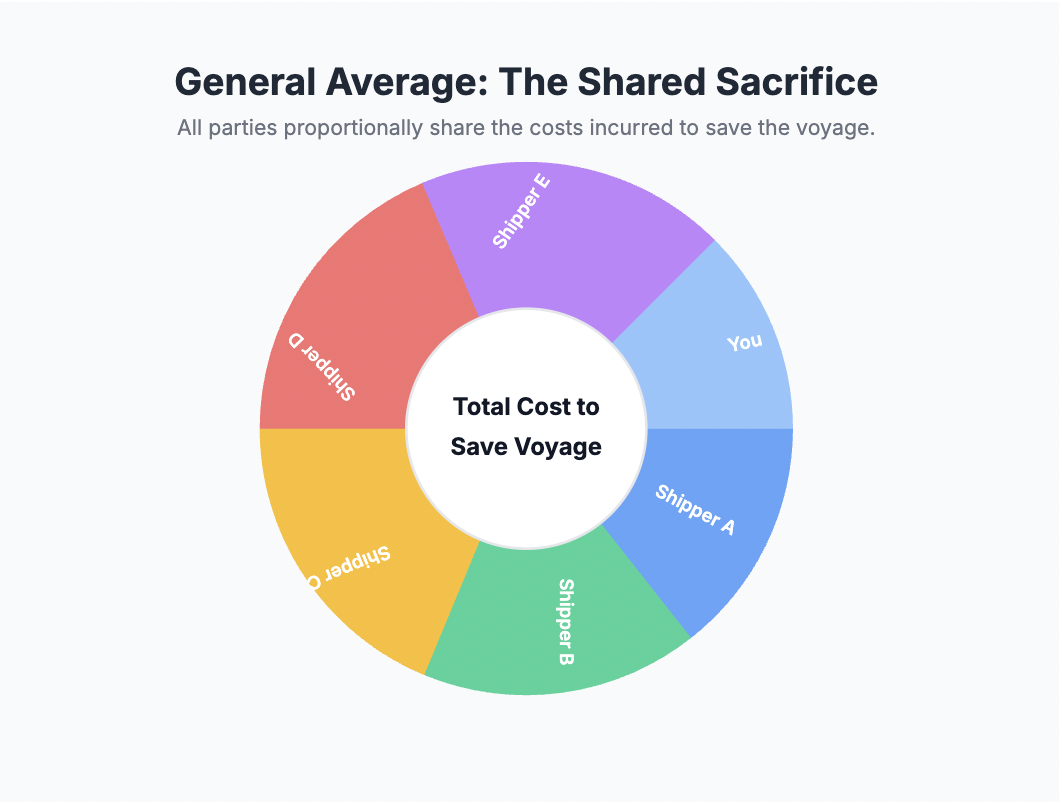
What is the General Average?
If a vessel is in peril (e.g., from a fire or running aground), the captain may intentionally sacrifice some cargo (jettison) or incur extraordinary expenses (like hiring a salvage tug) to save the overall voyage. Under GA, all parties whose cargo survived the voyage must proportionally share the cost of the sacrifice.
Reality: GA Targets the Unprepared
When the Ever Given blocked the Suez Canal, GA was declared. Small shippers paid $15k-$50k just to access their cargo.
How GA Works:
Carrier declares emergency (fire, grounding)
All shippers split costs (yes, even you)
No GA coverage? Your cargo is held hostage
The Only Defense:
Standard cargo policies include GA bonds. This bond from an insurer is critical because it allows you to avoid tying up your own company's cash in a deposit for months or even years while the final GA costs are calculated.
Verify your insurer’s GA process (some take weeks)
This is one of the most compelling reasons to purchase cargo insurance. A standard policy covers your GA contributions and provides the necessary bond to get your cargo released promptly. The governing principles are outlined in the York-Antwerp Rules.
Building a Bulletproof Insurance Strategy
A robust strategy goes beyond simply buying a policy. It integrates insurance into a broader risk management framework.
Risk Assessment: Identify your primary vulnerabilities. Is it temperature-sensitive cargo? High-value goods prone to theft? Time-critical components?
Coverage Architecture: Use a layered approach.
Primary Cargo Policy: For standard physical loss and damage.
Endorsements: Add specific coverage for risks like SR&CC (war/terrorism) or delay.
Contingent Insurance: Consider business interruption or DSU policies for critical supply chains.
Prevention and Documentation: The best claim is one you never have to file.
Packaging: Invest in proper blocking, bracing, and packaging.
Vetting: Use reputable carriers and forwarders with proven track records.
Documentation: Maintain meticulous records, from the commercial invoice to the final signed proof of delivery.
FAQ: Your Top Cargo Insurance Questions Answered
Q1: If my cargo is delayed AND damaged, which exclusion applies?
A: Insurers use "proximate cause" analysis. If delay caused the damage (e.g., fruit rotting), it's excluded. If damage happened during delay (e.g., container collision while stalled), it may be covered.
Q2: Can I buy separate "mysterious disappearance" coverage?
A: Rarely. Insurers view it as an unverifiable risk. Your best defense:
Use numbered barrier seals (like Maersk’s SmartSeal)
Require time-stamped loading videos from carriers
Q3: How fast must I act after discovering the General Average?
A: Within 72 hours typically. Delays can:
Risk cargo being auctioned
Incur extra fees
Q4: Are GA contributions tax-deductible?
A: Sometimes. The IRS allows it if:
The loss is not reimbursed by insurance
You itemize deductions (consult your accountant)
Q5: Do temperature trackers guarantee claim approval?
A: No—but they’re your best evidence.
Example:With tracker: "Your cargo hit 50°C for 8 hours = claim paid”
Without tracker: "Prove it wasn’t packed already warm"
Final Thoughts: Myths Die, Your Cargo Shouldn't
The gap between a shipper's expectations and a policy's reality is where financial losses occur. This gap isn't a result of bad faith, but of the immense complexity of global trade.
The best claims are the ones you never file.
Now that you know:
Audit your policy for delay/GA gaps
Train staff on evidence collection
Assume nothing—test seals, trackers, and clauses
For further industry standards and best practices, consult the International Union of Marine Insurance (IUMI).
Need to translate these insights into a workable strategy? Contact our logistics specialists for a personalized risk assessment and policy guidance.
Get a quote for your shipment
Have a shipment to move? Send the origin, the destination, the cargo and the container or weight; we reply with the rate, the routing and the services included.