


International Shipping from the USA: Why Your Shipping Quote May Not Be the Final Delivery Cost
October 12, 2026 | Airlift USA
A door-to-door shipping quote doesn't always include destination duties, taxes and customs clearance charges. For US exporters and online sellers, understanding who pays these costs before dispatch can help prevent unexpected expenses, delivery delays and dissatisfied customers.
When a US business ships goods to another country, the transportation quote is often the first cost it looks at.
But there's another question that matters just as much: What will the buyer have to pay before receiving the shipment?
A quotation may cover pickup, international transportation and final delivery. Import duties, destination taxes and customs clearance fees may be included or billed separately.
For businesses selling internationally, that difference can affect both the final selling price and the customer's delivery experience.
What does door-to-door shipping actually include?
Door-to-door shipping generally means transporting goods from the sender's location to the recipient's address.
It does not automatically mean every customs duty, tax or destination charge is included.
Depending on the destination and service arrangement, additional costs may include:
Import duties: Charges determined by the destination country's tariff rules, product classification, customs value and other applicable factors.
Import taxes: VAT, GST or other taxes assessed when goods enter the destination country.
Customs clearance charges: Brokerage, processing or administrative fees associated with clearing the shipment.
Some services include certain destination charges in the quotation. Others collect them separately from the shipper or recipient.
The important point is to establish exactly what the quotation covers before dispatch.
Who pays import duties and taxes: DAP or DDP?
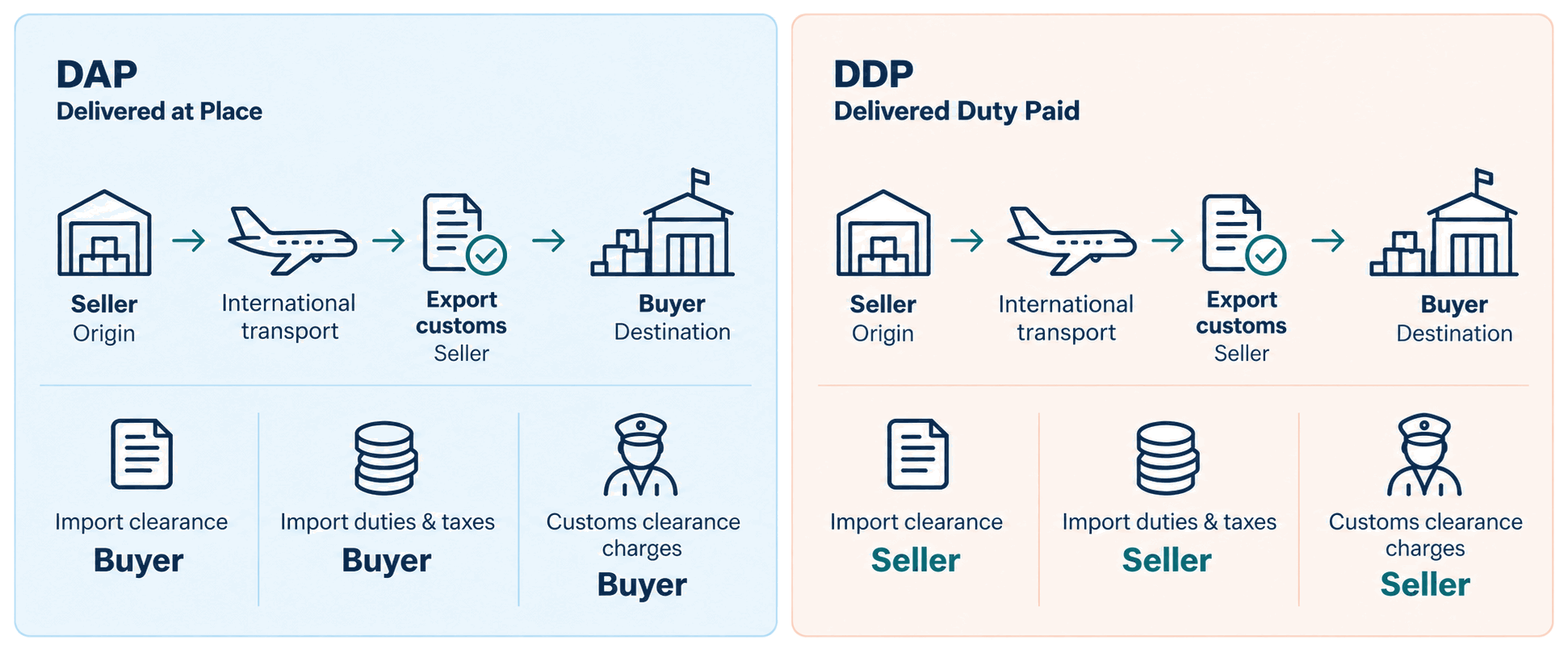
Two commonly used international trade terms help define responsibilities between sellers and buyers.
Under both terms, risk generally transfers when the goods are placed at the buyer's disposal at the named destination, ready for unloading.
DDP can help sellers offer a more predictable landed cost to their customers, but it also places greater responsibility on the seller.
A seller may not be permitted to act as the importer or complete customs clearance in every destination country. Local requirements should therefore be checked before agreeing to DDP.
Neither arrangement is automatically better. What matters is that both parties understand their responsibilities before the shipment leaves the USA.
Destination-country rules can change the final cost
International shipping costs are influenced by more than weight, dimensions and distance.
The destination country's customs rules, product classification, customs value and origin of the goods can all affect what must be paid.
A recent example is the European Union's temporary customs duty on qualifying low-value e-commerce imports.
From July 1, 2026, the EU introduced a temporary €3 customs duty on qualifying low-value distance sales to consumers within its €150 threshold.
The duty is assessed per item, with an item defined as goods sharing the same tariff classification, description and, where relevant, origin. This means multiple physical products may count as one item for customs purposes.
The measure is scheduled to apply until July 1, 2028, subject to possible extension.
For US businesses selling to European consumers, it illustrates why even relatively small shipments need an accurate assessment of destination import costs.
Import rules differ across countries and can change. Exporters should check current requirements before promising a final delivered price.
What happens when destination charges are unclear?
A buyer who did not expect additional import charges may question the amount, delay payment or refuse the shipment.
Depending on the circumstances, this can result in customs or delivery delays, storage charges, return costs and additional customer service work.
For online sellers, unexpected charges can also affect customer confidence and repeat purchases.
These problems are easier to prevent when the seller explains destination charges clearly before accepting the order.
What should US exporters check before shipping?
Before confirming an international shipment:
Agree who pays destination charges. Establish whether the seller or recipient is responsible for import duties, taxes and clearance fees.
Confirm what the shipping quotation includes. Check pickup, international transportation, customs clearance and final delivery separately.
Describe the goods accurately. Provide the correct product description, customs value, country of origin and appropriate tariff classification.
Check destination restrictions. Certain products may require additional documentation or may be restricted from import.
Keep shipping documents consistent. Commercial invoices, product descriptions and shipment details should reflect the actual goods being shipped.
What information should you have ready when requesting a quote?
Providing complete shipment details helps a freight forwarder assess the transportation requirements and identify potential customs considerations.
Prepare:
Description, value and country of origin of the goods
Number of packages, dimensions and gross weight
Pickup and delivery locations
Whether the sender or recipient will pay destination import charges
Details of batteries, liquids or other goods that may be subject to transport restrictions
The more complete the information, the easier it is to clarify what is included in the quotation and what may remain payable at the destination.
Frequently asked questions
Does door-to-door shipping include import duties and taxes?
Not necessarily. Door-to-door describes the transportation arrangement. Whether duties, taxes and clearance charges are included depends on the quotation and agreed terms.
Who pays customs duties when goods are shipped from the USA?
Under DAP, the buyer generally pays destination import duties and taxes. Under DDP, the seller assumes those responsibilities, subject to the applicable destination-country requirements.
Why might a buyer be charged before delivery?
Import duties, taxes or clearance fees may not have been included in the original transportation or purchase price. These charges may need to be settled before customs release or delivery.
Are low-value international shipments always duty-free?
No. Duty thresholds and exemptions vary by destination. The EU's 2026 low-value e-commerce measure is one example of why current country-specific rules matter.
Plan the full delivery cost, not just the shipping cost
For US businesses shipping internationally, a competitive transportation quote is important. But it is only one part of planning a successful delivery.
Understanding who handles customs clearance, who pays destination charges and what the quotation includes helps businesses set clearer expectations with overseas buyers.
The best time to resolve these questions is before the goods leave the USA—not when the shipment reaches customs.
Shipping internationally with Airlift USA
Whether you're sending e-commerce orders, personal belongings or smaller commercial shipments, explore Airlift's door-to-door international shipping service from the USA to understand your options and request a quotation.
For heavier commercial shipments or time-sensitive cargo, learn more about Airlift's air freight services.
Sources
European Commission – EU €3 customs duty on low-value e-commerce consignments
Council of the EU – Customs duty on small parcels from July 1, 2026
Get a quote for your shipment
Have a shipment to move? Send the origin, destination, cargo, and container size or weight. We reply with the rate, the routing and the services included.
