


January 2026
Ocean freight rates are lower than they were a year ago. Contracts have been reset. On paper, freight budgets should look better.
Yet across many importers, total freight spend has not declined in proportion to those rate reductions.
The reason is not failed negotiation or sudden market reversal. It is execution.
When shipments do not move as planned, companies recover in ways that are rarely visible in the original freight rate. They expedite. They reroute. They absorb penalties. They scramble to protect buyer commitments. The resulting costs surface later, across different teams, budgets, and weeks.
Taken together, these costs form a hidden surcharge applied after the fact.
That surcharge is the Exception Tax.
The Exception Tax is not a line item or a penalty fee. It is the total economic cost of freight execution that does not go according to plan.
It includes the obvious recovery actions, such as air freight booked to protect a delivery window or demurrage incurred while resolving a delay. It also includes less visible impacts: buyer chargebacks, lost sales from stockouts, and internal time spent managing disruptions rather than planning ahead. Most companies experience these costs regularly, but few connect them back to the original execution failure that triggered them.
Defining the Exception
An exception is any event that requires manual intervention to keep cargo on track. This means someone has to step in to investigate, escalate, rebook, or recover.
Sometimes the issue originates with the carrier, such as a rolled container or a blank sailing. Sometimes it originates with compliance, such as missing or incorrect documentation that triggers a customs hold. Other times it happens on the ground, through drayage delays, warehouse receiving issues, or detention and demurrage. In many cases, the exception is compounded by communication gaps, where problems are discovered late or ownership is unclear.
Individually, none of these events are unusual.
The cost comes from how they compound.
The Compounding Cost of a Rolled Container
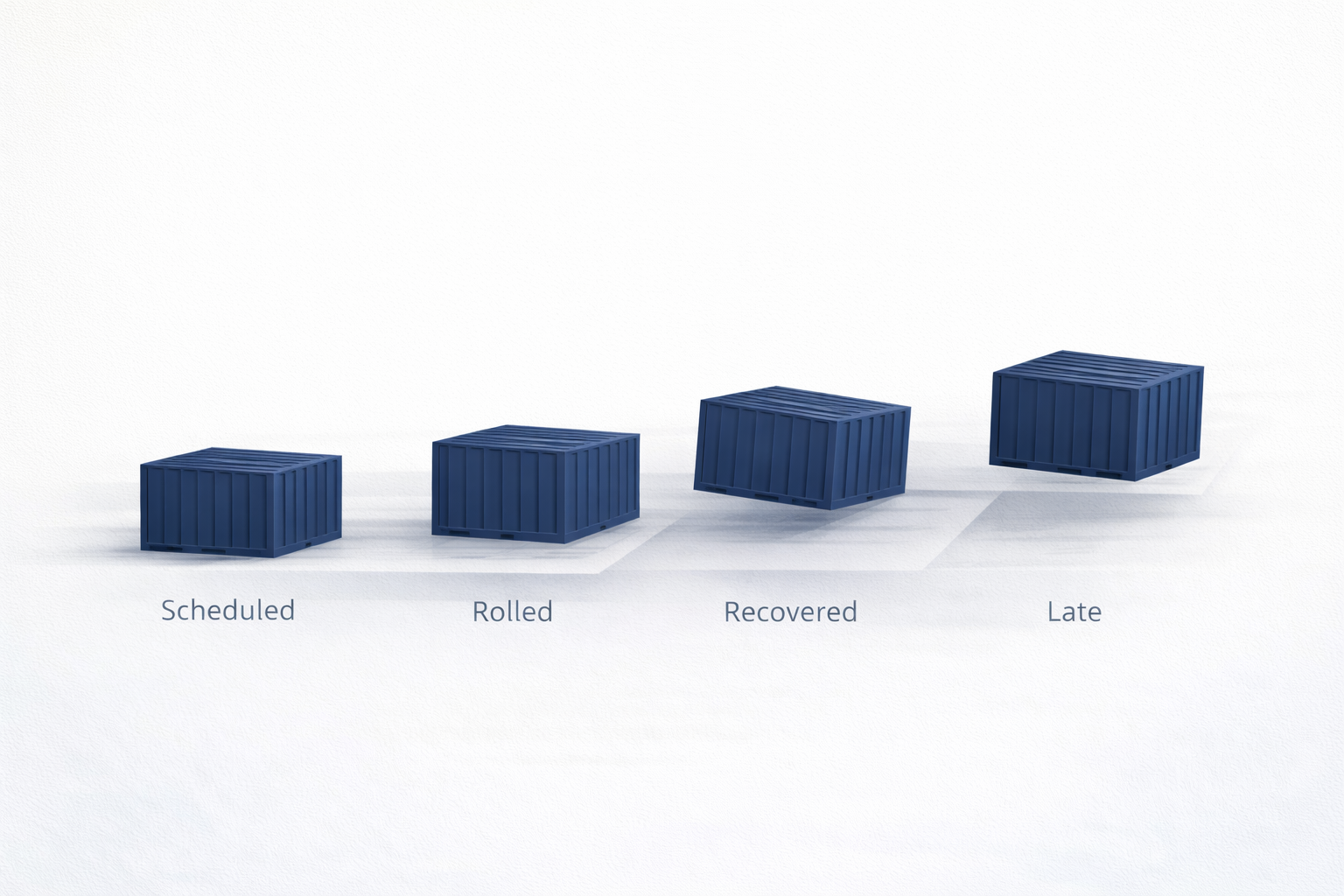
Consider what happens when a single container is rolled at origin.
In the first week, the container misses its intended sailing. The reason could be overbooking, a blank sailing, or equipment constraints. Delivery shifts by a week or more. At this stage, most teams assume the delay is manageable.
In the second week, the downstream impact becomes clearer. A buyer flags that critical SKUs are needed for an upcoming retail window. The choice is no longer abstract. Either the shipment misses the window, or the company recovers. To protect the relationship, a partial air freight move is booked for the most time-sensitive product.
That recovery action alone costs roughly fifteen thousand dollars.
In the third week, the ocean shipment arrives late. The buyer applies chargebacks for the missed delivery window. Promotional placement is lost. Sales are missed during the stockout period. Internally, operations, customer service, and finance have already spent hours coordinating recovery, answering questions, and reconciling unexpected charges.
When all of this is tallied, the cost of that single rolled container looks roughly like this:
Air freight recovery of about fifteen thousand dollars. Buyer chargebacks of roughly eight thousand. Lost sales conservatively estimated at twenty-five thousand or more. Internal labor costs approaching a thousand dollars.
The total impact approaches fifty thousand dollars.
The negotiated rate savings on that container are typically a few hundred dollars.
That gap between expected savings and realized cost is the Exception Tax.
Why the Cost Remains Invisible
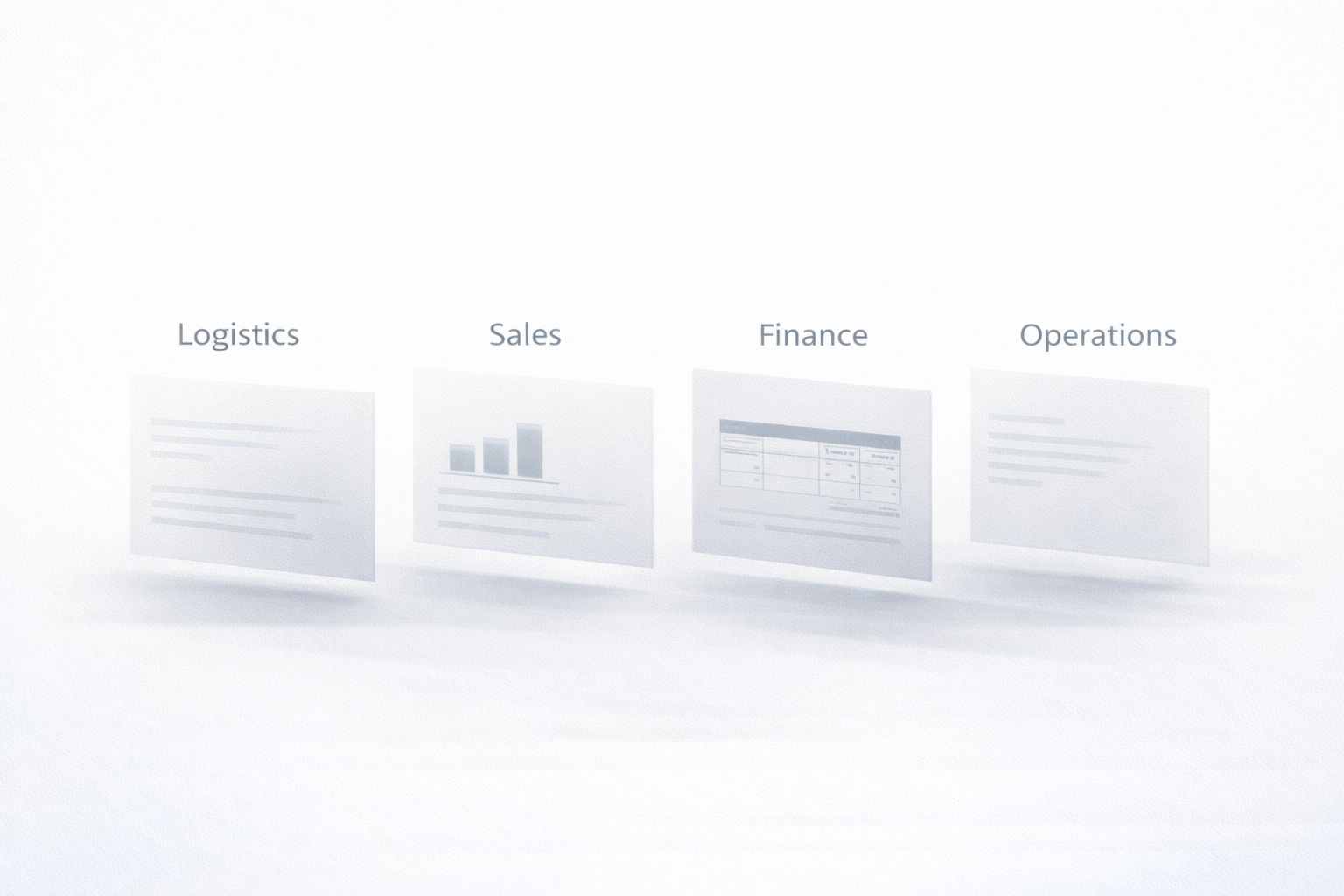
Despite how material these numbers are, most companies do not see the full cost clearly.
One reason is that the costs are fragmented. Logistics sees the air freight invoice. Sales sees the chargeback. Finance sees an unexplained overrun. No single team owns the full picture, so the total cost is never connected back to the original execution failure.
Another reason is that exceptions are managed in crisis mode. When execution breaks, the priority is recovery. Teams focus on moving cargo, protecting customers, and minimizing immediate damage. Cost attribution comes later, if it comes at all. By the time expenses are reviewed, the operational context is often lost.
Finally, exceptions have been normalized. Freight is unpredictable. Delays happen. This is true. But it does not mean the cost of those delays is inevitable. Companies paying the Exception Tax are not unlucky. They are simply not measuring it.
This matters more in 2026 than it did in prior years.
Across many major lanes, rates have come down meaningfully compared to the prior cycle. Schedule reliability has not improved at the same pace. The result is a widening disconnect between contracted savings and realized cost. When a meaningful share of shipments experience exceptions, even modest disruptions can erase rate gains entirely.
This leads to a familiar question at the executive level: if rates are lower, why has freight spend not fallen proportionally?
For many organizations, the answer is not procurement. It is execution.
And unless exception costs are measured end to end, that answer remains invisible.
Seeing the Exception Tax is only the first step. In the next post, we will walk through how to measure it in practice, how to identify where it originates, and why reducing exception frequency often delivers more savings than negotiating lower rates.
Because once exception costs are visible, they become manageable.
Rates will always fluctuate. Exception costs are quieter, more diffuse, and far more controllable than most companies realize. Until they are measured, they silently inflate freight spend. Once they are measured, they change how decisions get made.
That is the Exception Tax.
What Comes After Visibility
Centralizing communication is a necessary first step.
But once conversations are tied to shipments, a more uncomfortable question emerges: what is unreliable execution actually costing you?
In the next post, we examine how exception-driven costs quietly inflate freight spend — and how leading importers are measuring and reducing what we call the Exception Tax.
Continue reading → Measuring and Reducing the Exception Tax
Get a quote for your shipment
Have a shipment to move? Send the origin, the destination, the cargo and the container or weight; we reply with the rate, the routing and the services included.