

How 2025’s Tariff-Driven Rush is Reshaping Trans-Pacific Trade — And What to Do Next
In global shipping, some years follow predictable patterns. 2025 is not one of them.
Instead of the usual steady climb toward a late-year peak season, the first half of the year delivered a fast-paced, high-stakes game of “ship it now or pay for it later.” Tariff-driven frontloading turned schedules upside down, jammed vessel space, and sent freight rates soaring - only for them to plunge as the surge passed.
Now that the August tariff deadline has passed, the market is entering a new phase. Whether you’re a logistics veteran or new to global trade, this guide breaks down:
What frontloading really means (and why it’s like hitting "fast forward" on shipping)
How 2025’s tariff panic unfolded
Where we are now (and how to capitalize on today’s market)
Smart strategies for the next policy shift
Frontloading: The Fast-Forward Button on Trade
Frontloading is the practice of moving shipments earlier than planned to avoid expected tariff hikes or other trade changes. Instead of following natural demand cycles, businesses pull orders forward to beat the deadline.
If normal shipping is like following a season-by-season calendar, frontloading is hitting “fast forward.”
Shortened production timelines — factories work at full tilt
Compressed shipping schedules — peak volumes hit weeks or months early
Larger bookings — demand temporarily outstrips supply
Inventory build-up — warehouses stock up as a hedge
In 2025, the driver was the potential for higher US tariffs on Chinese goods — and the reaction was swift.
The 2025 Frontloading Wave — In Numbers
Peak Panic (April–June 2025)
Volume shock: June shipments matched typical Q4 holiday levels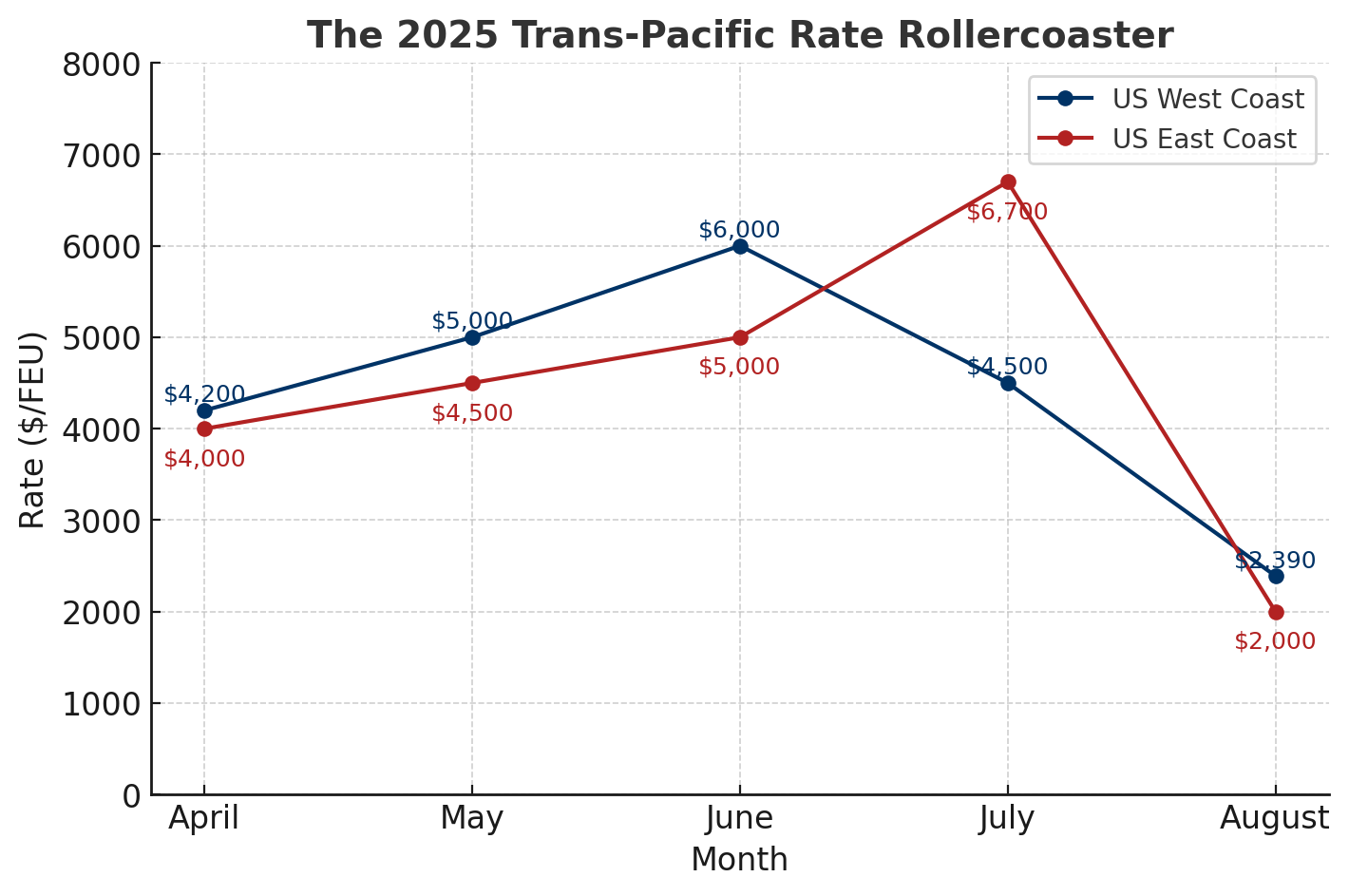
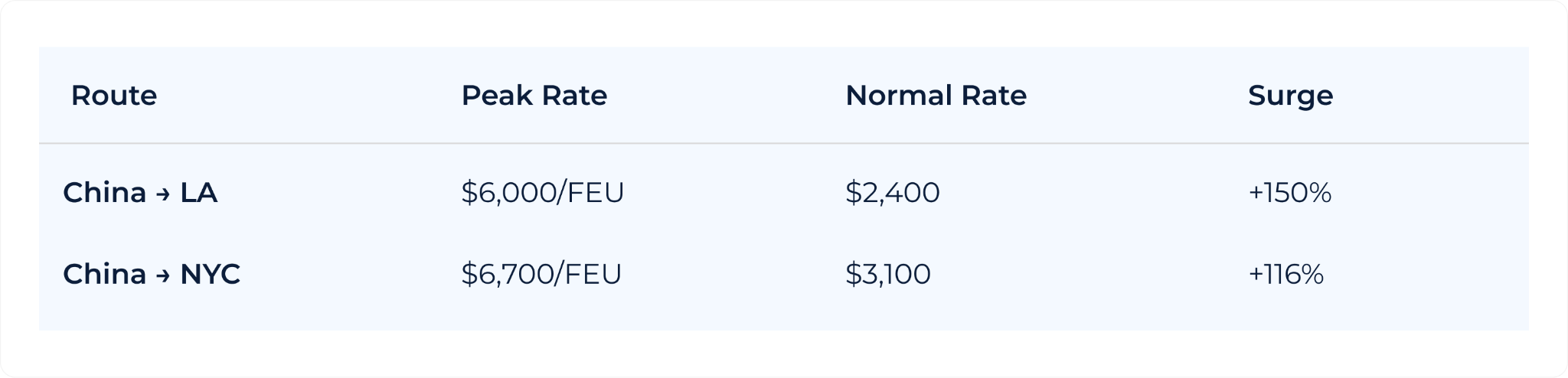
Post-Deadline Plunge (August 2025)
West Coast rates: Collapsed 60% to $2,390/FEU - back to pre surge levels.
Capacity Crunch: Carriers now sailing half-empty ships after overexpanding for the rush
Air freight slump: Demand dropped as shippers returned to cheaper ocean options
Market hangover: Excess vessel space could mean extended soft pricing
(Source: JOC Journal, Freightos Air Index)
A Knock-On Effect: Air Freight Feels It Too

Frontloading’s ripple effects don’t stop at the water’s edge. The JOC Journal reports that the ocean rush “sucked the demand out of the trans-Pacific air cargo business,” as many shippers, given the extra lead time, opted for lower-cost ocean transport over air.
According to Freightos Air Index, China–US air cargo rates hovered around $5.17/kg in July, slightly down from early summer. As one analyst put it, high inventory levels and clear tariff timelines gave businesses the luxury of choosing slower, cheaper transport.
For readers new to this: this is a textbook example of modal shift — when cargo switches between transport types depending on cost, urgency, and market conditions.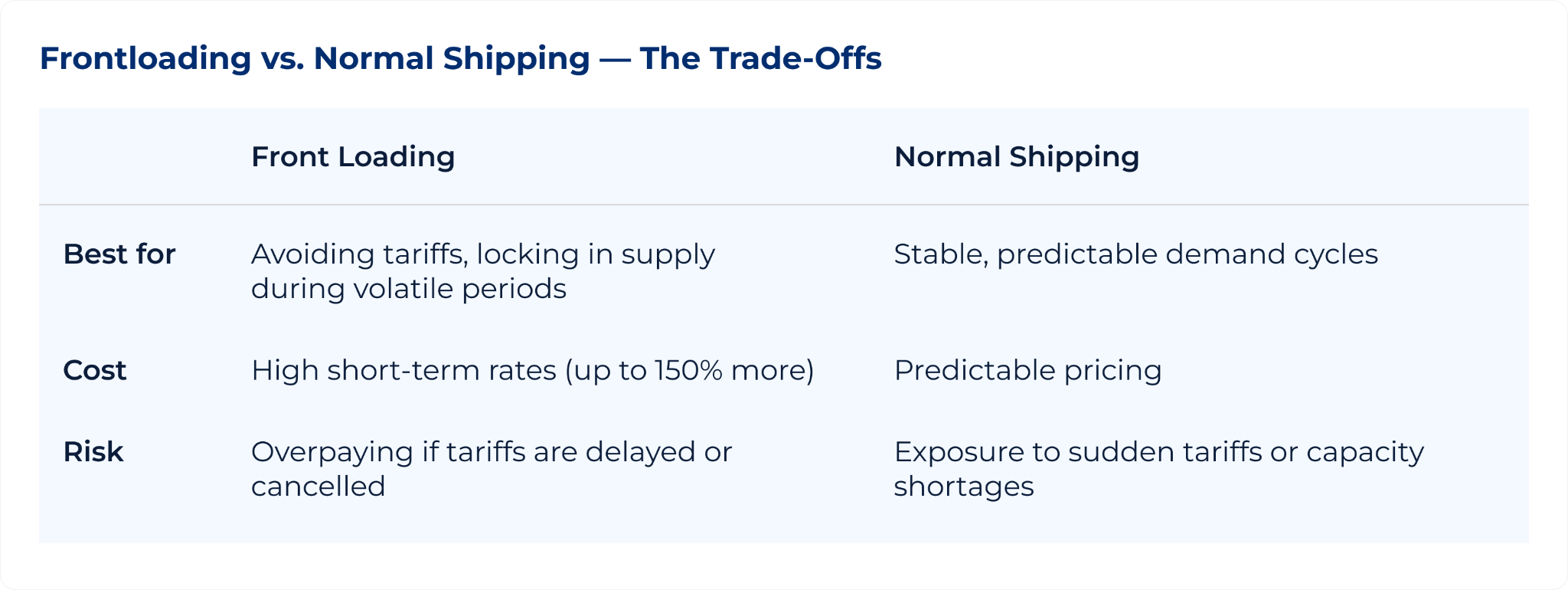
August–September 2025: The Opportunity Window
With rates down and space available, shippers have leverage — but this window won’t last forever.
If you ship regularly:
Lock in competitive long-term contracts now.
Replenish inventory at reduced freight costs.
If you ship seasonally:
Move holiday cargo early to sidestep potential Q4 rate climbs.
Prepare “fast track” playbooks for the next tariff-triggered rush.
Why This Matters Beyond Ocean Freight
The JOC Journal also points out a capacity mismatch in air cargo after the tariff deadlines shifted. Airlines added flights for a July rush, but demand peaked earlier, leaving carriers with extra capacity.
The lesson: sudden changes can alter where capacity is available, how long it lasts, and which mode is most cost-effective. Flexibility is as important as foresight.
Technology and Partnerships Make the Difference
Real-time rate benchmarking — know if today’s quote is competitive.
Automated policy alerts — get notified before the market reacts.
Visibility platforms — track shipments end-to-end.
Predictive analytics — forecast demand surges before they happen.
The Bottom Line — For Experts and Newcomers Alike
For seasoned professionals, 2025 reinforced a familiar truth: agility wins in volatile markets.
For those new to global shipping, the takeaway is simple: moving goods is not just about the “how,” it’s about the when. The right timing can
protect your margins, secure your supply, and keep your customers happy — and sometimes, that means acting early to save later.
Airlift USA Inc helps businesses navigate both the high-pressure sprints and the steady, predictable shipping cycles. Whether you’re frontloading to beat a tariff or shipping to meet seasonal demand, we ensure your cargo moves efficiently, cost-effectively, and without surprises.
Contact us today to prepare your shipping strategy for whatever the market does next.
Get a quote for your shipment
Have a shipment to move? Send the origin, the destination, the cargo and the container or weight; we reply with the rate, the routing and the services included.