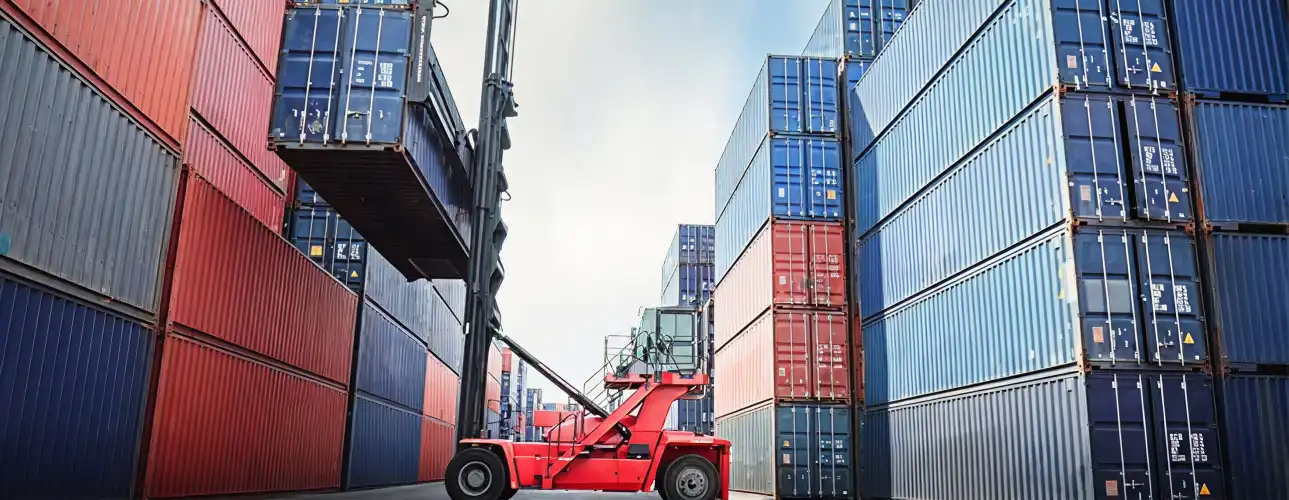


In freight forwarding, the quote you receive is only the beginning. What looks like savings upfront often hides operational risks, customer dissatisfaction, and unexpected costs that can damage your business long after the container leaves the port. Here’s why smart logistics leaders are rethinking what “value” really means in freight.
The Low-Cost Illusion
Buying cheap often feels smart—until the product breaks and you’re paying more to replace it.
Now imagine applying that logic to your freight forwarder.
When logistics is treated like a bulk discount purchase, the risks multiply fast.
What looks like savings on the surface often leads to real losses downstream.
The Invisible Auction
Every freight quote you receive is part of an invisible auction. But here's the twist: you're not just bidding on transportation. You're bidding on three things simultaneously:
Space on a vessel (the obvious part)
Priority when things go wrong (the part nobody talks about)
Access to solutions (the part that saves businesses)
The cheapest bidder wins the first auction. They rarely win the other two.
In supply chain management, your backup plan is just as important as your base rate.
The Conversation That Changed Everything
I once sat across from a procurement director who had just fired his freight forwarder. Not for poor service. Not for delays. For being too expensive.
"I saved the company $18,000 last year," he said proudly, showing me his spreadsheet.
"What did it cost you?" I asked.
He looked confused. "What do you mean?"
"I mean, what did those savings actually cost your business?"
Two hours later, we had mapped out the real numbers:
Six missed product launches (delayed by shipping issues)
Fourteen emergency air shipments (to recover from sea freight failures)
One major customer threatening to leave (due to consistent delays)
Countless overtime hours (managing crises that shouldn't have happened)
The $18,000 in "savings" had cost them $340,000 in lost opportunities.
He hired us the next week.
Savings aren't real if they come at the cost of growth.
The Paradox of Cheap
Here's something that will blow your mind: The companies that pay the least for freight often have the highest logistics costs.

Why? Because they're constantly in crisis mode. They're paying premium rates for emergency solutions to problems that proper planning could have prevented.
It's like buying cheap tires for your car. Sure, you save money upfront. But when they fail on the highway, the tow truck, the missed meetings, the rental car, and the emergency replacement cost ten times what good tires would have cost originally.
Penny-wise and logistics-foolish is a real thing.
The Psychology of Procurement
Procurement teams are trained to see every vendor as a commodity. Same service, different price. Pick the cheapest.
This works great for paper clips and office furniture. It's catastrophic for freight forwarding.
Why? Because freight forwarding isn't a commodity. It's a relationship. It's insurance. It's peace of mind. It's the difference between your business running smoothly and your business running into the ground.
But try explaining that to someone whose bonus depends on cutting costs.
Choosing a freight partner isn’t a cost decision. It’s a continuity decision.
The Three-Card Monte of Freight Quotes
Ever played a three-card monte? It's a street con where you pick the red card, but it's never where you think it is. Cheap freight quotes work the same way.
The Setup:
Quote A: $2,400 "all-inclusive"
Quote B: $2,800 "full service"
Quote C: $3,200 "premium handling"
The Reality:
Quote A: $2,400 + $1,800 in hidden fees and delays
Quote B: $2,800 (actual all-inclusive)
Quote C: $3,200 (includes extra services you might not need)
Which card are you going to pick?
Most people pick Quote A. The smart money picks Quote B.
Freight quotes aren't always what they seem — clarity is worth paying for.
The Iceberg Effect

You know what sank the Titanic? Not the part of the iceberg they could see. The part they couldn't.
Freight quotes are icebergs. The rate is the tip. The real costs are hidden underwater:
Above the waterline (visible):
Ocean freight rate
Basic handling fees
Standard documentation
Below the waterline (invisible until impact):
Demurrage when cargo sits too long
Detention when containers aren't returned on time
Amendments when paperwork is wrong
Penalties when deliveries are late
Emergency shipping when things go sideways
Lost sales when customers get fed up.
The companies that focus only on the tip end up like the Titanic.
A transparent quote helps you avoid hidden operational icebergs.
The Wal-Mart Fallacy
Sam Walton built Walmart on "Always Low Prices." Brilliant strategy for retail. Terrible strategy for logistics.
Why? Because Walmart's customers choose to shop there. Your customers don't choose your freight forwarder. They just suffer the consequences of your choice.
When Walmart screws up, customers get annoyed and shop elsewhere. When your freight forwarder screws up, YOUR customers get annoyed and shop elsewhere.
You can't build customer loyalty on your vendor's failures.
In freight, your choice affects your customer experience — whether they know it or not.
The Real Cost of "Savings"
Let me paint you a picture of what $500 in freight "savings" actually looks like:
Month 1: You're a hero. The CFO loves the cost reduction.
Month 2: First delay. You explain it's a one-off.
Month 3: Second delay. You start making excuses.
Month 4: Customer complaints pile up. You're in damage control mode.
Month 5: Major customer threatens to leave. You're scrambling.
Month 6: You're looking for a new freight forwarder.
The $500 monthly savings just cost you a customer worth $50,000 annually.
Was it worth it?
Short-term savings shouldn’t create long-term churn.
The Amazon Effect
Amazon has spoiled everyone. Two-day delivery. Real-time tracking. Instant customer service.
Your customers don't care that you're shipping from China, not a local warehouse. They don't care about port congestion or customs delays. They just want their stuff on time.
When you choose the cheapest freight option, you're betting your customer relationships on a provider who cuts corners.
Amazon doesn't use the cheapest logistics providers. They use the most reliable ones.
There's a reason for that.
Customers judge you by the delivery experience—not your procurement strategy.
The Insurance Nobody Talks About
Every freight forwarder sells the same thing: moving stuff from Point A to Point B.
But successful companies aren't buying transportation. They're buying insurance.
Insurance that their supply chain won't break down. Insurance that their customers will stay happy. Insurance that their business will keep growing.
The cheapest "insurance" is usually the most expensive when you need to file a claim.
A good freight partner is a business continuity plan in disguise.
The Moment of Truth
Here's when you discover if you chose the right freight forwarder:
Not when everything goes right. Any idiot can move cargo when nothing goes wrong.
When everything goes wrong. When the container gets rolled. When customs hold your shipment. When the truck breaks down. When the port goes on strike.
That's when you learn whether you bought transportation or bought a partnership.
Great partners show their value when things fall apart—not when things go to plan.
The Question That Cuts Through the Noise
Stop asking "What's your rate?"
Start asking "What happens when things go wrong?"
The answer will tell you everything you need to know.
Cheap providers: "We'll do our best to resolve issues."
Professional providers: "Here's our 24/7 escalation process, our average response time, and three recent examples of how we've solved similar problems."
One is hoping for the best. The other is prepared for the worst.
Resilience isn’t a line item. It’s built into the partnership.
The Bottom Line
You can't save your way to success in logistics. You can only execute your way to success.
The cheapest rate isn't cheap if it doesn't work. The most expensive rate isn't expensive if it protects your business.
Your freight forwarder is like a doctor. You don't want the cheapest surgeon operating on your heart. You want the best one.
Your supply chain is the heart of your business.
Choose accordingly.
The Real Question
It's not "Can you afford to pay more for freight?"
It's "Can you afford not to?"
Further Reading
"Calculating the Total Cost of Ownership in Your Supply Chain" - Droppe https://droppe.com/blog/article/total-cost-of-ownership-how-to-calculate/
"The True Cost of Demurrage and Detention: A 2024 Report" - OPSdesign Consulting https://opsdesign.com/detention-and-demurrage-charges/
Loyalty link: How supply chain resilience impacts customer retention? - DQIndia
Ready to stop gambling with your supply chain? Let’s talk about protection, not just price.
[Contact Airlift Today]
Get a quote for your shipment
Have a shipment to move? Send the origin, the destination, the cargo and the container or weight; we reply with the rate, the routing and the services included.