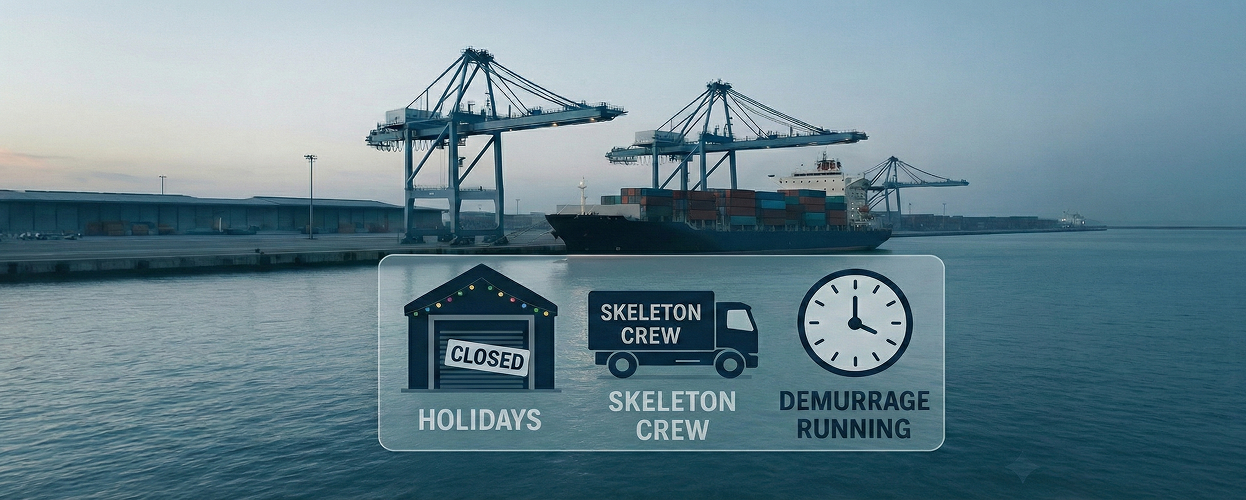


Late December.
Port volumes are down.
Terminal yards look calm.
Your container is scheduled to arrive on December 27.
“Perfect timing,” you think. “No congestion. Easy pickup.”
Then reality sets in.
Your customs broker is out until January 2.
The drayage company is operating with a skeleton crew.
Your warehouse is closed until the first week of January.
The chassis pool is technically available — but operationally constrained.
And the demurrage clock?
Still running.
This is the holiday blind spot — a recurring operational risk that catches many importers off guard every year.
Why “Quiet Ports” Are Deceiving
Late December often looks like an ideal arrival window:
Fewer vessels at berth
Less visible congestion
Faster discharge times
Fewer appointment backlogs
But port operations do not function in isolation.
During the holiday period, the broader support ecosystem that
enables container movement operates with reduced capacity:
Customs processing teams are smaller
Drayage availability is limited
Warehouses operate reduced hours or close entirely
Chassis circulation slows as equipment sits idle
Fewer support resources are available when issues arise
A container may be discharged and technically “available,” but
without customs release, trucking capacity, chassis access, and a receiving warehouse, it is not actually movable.
The Four Hidden Costs of Holiday Arrivals
1. Demurrage Through Closures
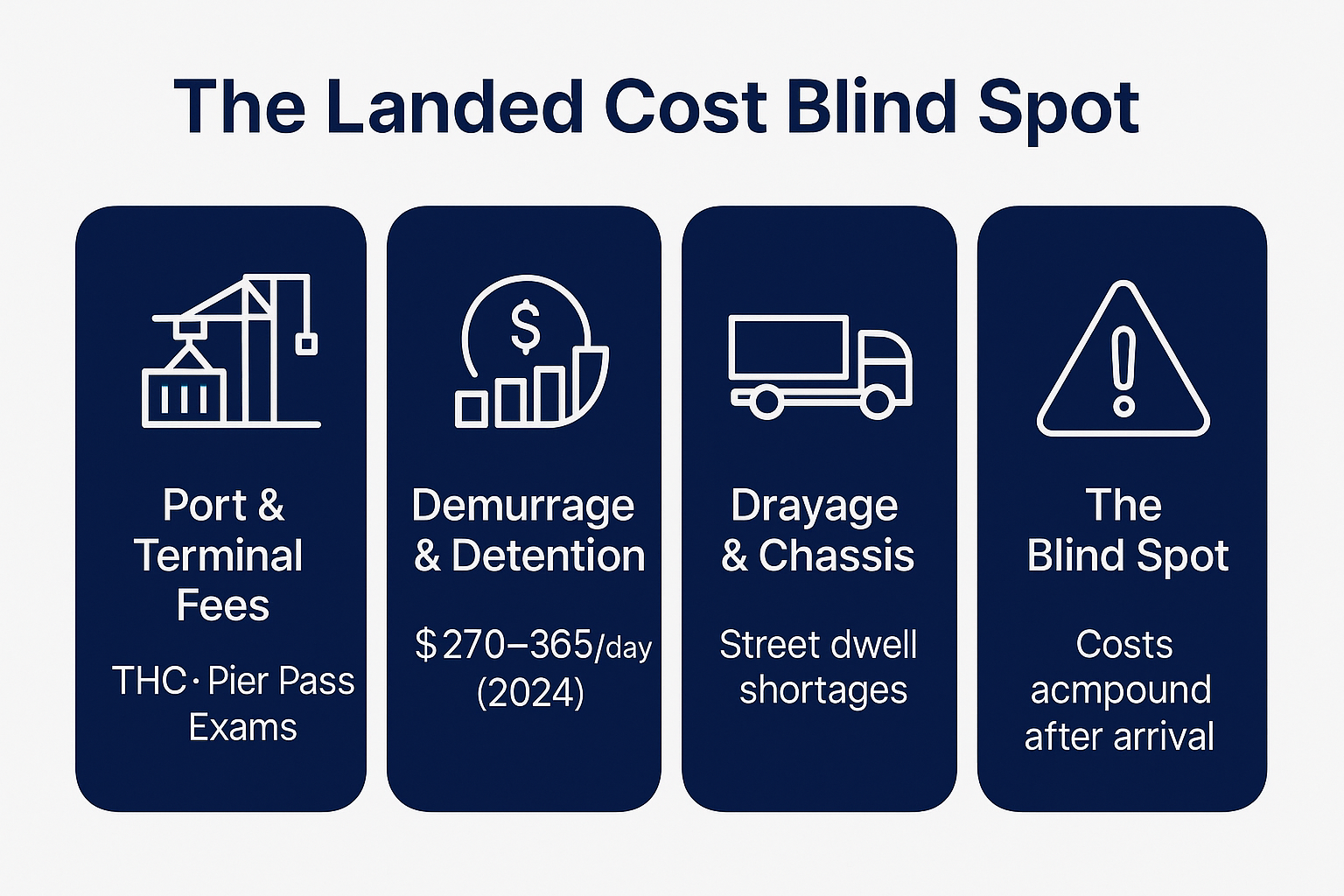
Demurrage does not pause for holidays.
Free time continues to count through weekends and closures, meaning containers can burn through allowable days even when pickup or delivery is not operationally possible. Charges often become visible only after normal operations resume.
2. Premium Drayage Rates
Holiday staffing constraints affect pricing.
With fewer drivers available, drayage providers prioritize committed or premium moves. Importers booking after arrival often face higher spot rates, holiday surcharges, or longer lead times than expected.
3. Chassis Detention
When warehouses are closed, containers sit.
Extended street dwell ties up chassis longer than planned, triggering detention charges even when delays are driven by calendar constraints rather than execution issues.
4. Delayed Inventory Availability
Even when clearance is achieved, delivery may be delayed until facilities reopen.
This pushes inventory availability into January, affecting sales timing, fulfillment planning, and cash flow — especially for shipments intended to support early-year demand.
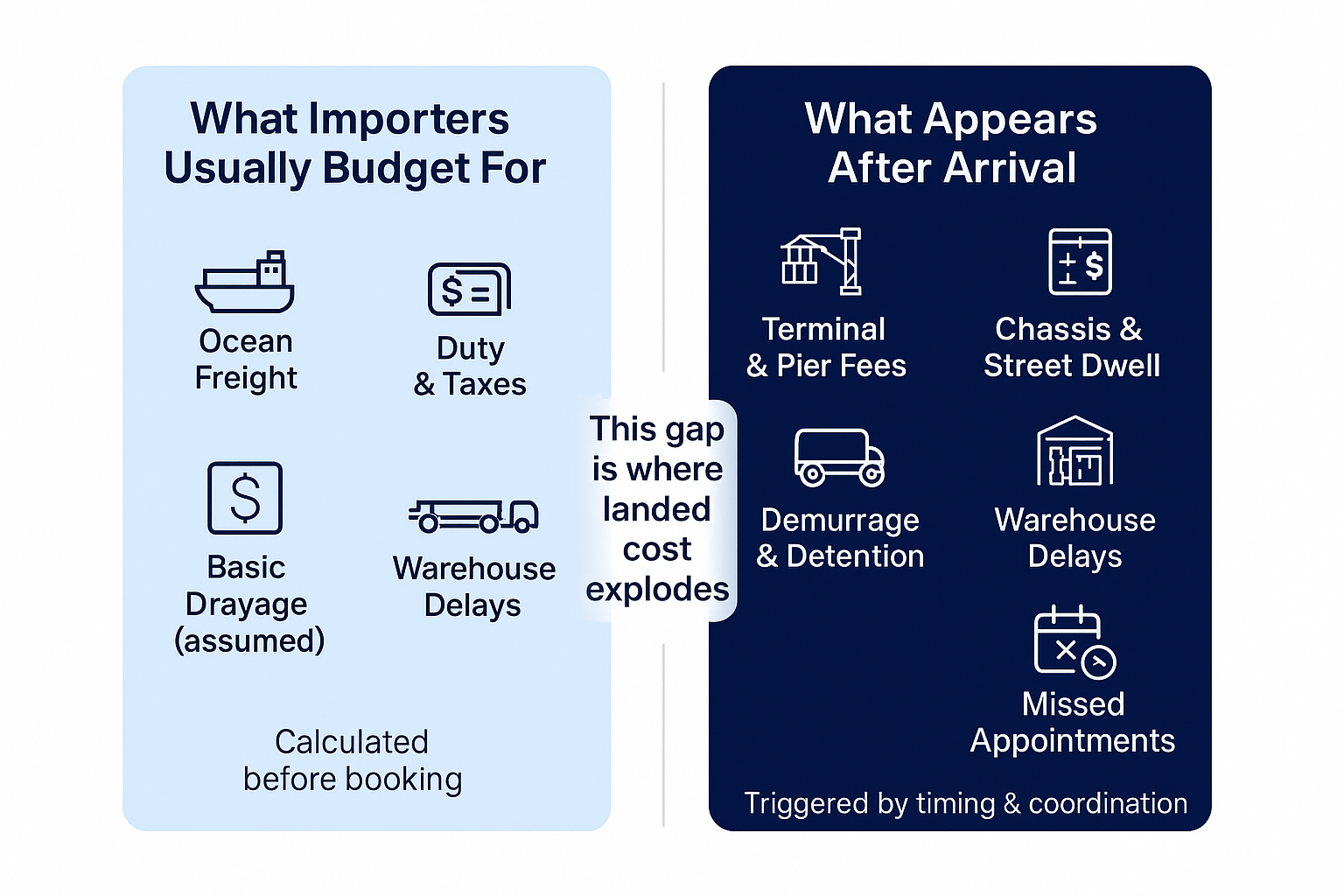
During late December, the gap between what importers budget for and what actually appears widens—not because costs are inherently higher, but because coordination becomes harder when the supporting ecosystem operates at reduced capacity.
The costs on the right don't pause for holidays. But the resources to avoid them do.
Three Common Arrival Scenarios
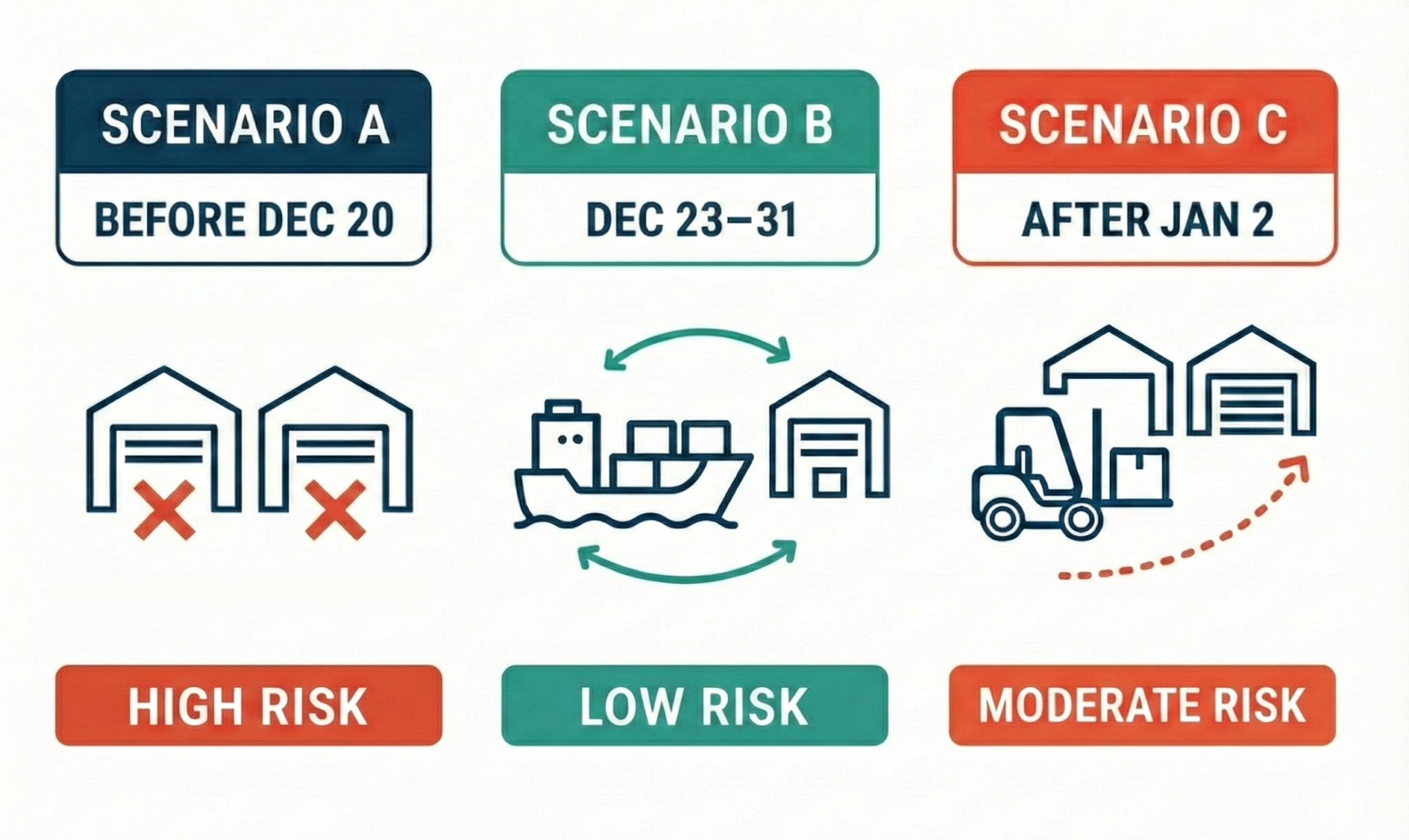
Scenario A: Arrival Between December 23–31
This is the highest-risk window.
Operations are fragmented by closures, reduced staffing, and limited appointment availability. Containers arriving during this period may sit idle for several days — not due to congestion, but because customs processing, drayage capacity, chassis availability, and warehouse schedules do not align. Costs accumulate quietly until normal operations resume in early January.
Scenario B: Arrival Before December 20
This is the optimal window.
Documentation, clearance, pickup, and delivery can typically be completed before holiday shutdowns begin, avoiding most calendar-driven delays and charges.
Scenario C: Arrival After January 2
This is manageable.
Operations resume gradually, with some backlog clearing. With advance planning, most shipments move under standard timelines and cost structures.
The takeaway: Late December is not neutral territory. The calendar matters more than visible port conditions.
Quick Self-Check
If your container arrives between December 23 and December 31, confirm the following:
Customs documentation has already been submitted
Drayage is booked with a confirmed post-holiday pickup window
Warehouse has confirmed receiving days and first available slot
A contingency plan exists if equipment or trucking availability tightens
If any box is unchecked, coordination should begin now — before holiday schedules limit options.
What Importers Can Control
If your shipment arrives in the late-December window, coordination matters more than speed.
Key actions include:
Completing customs documentation and clearance before holiday closures
Booking drayage in advance and confirming post-holiday availability
Aligning warehouse receiving schedules with pickup plans
Identifying priority containers ahead of arrival
Considering strategic delay when feasible, rather than absorbing holiday-driven costs
In some cases, adjusting arrival timing by a few days can be more cost-effective than navigating reduced holiday operations.
The Calendar That Actually Matters
Late-December risk follows a predictable pattern:
Mid-December: Planning window
Late December: Reduced operations and closures
Early January: Backlog clearing and delayed deliveries
The danger is not congestion — it is compressed operational capacity.
Why This Matters Now
Holiday delays rarely end with the holidays.
Containers delayed in late December often roll into January, when volumes increase and capacity tightens again. What begins as a calendar-driven delay can quickly extend into broader operational disruption if not addressed early.
Quiet ports do not guarantee fast cargo movement when the supporting ecosystem is also quiet.
Final Thought
Late December arrivals feel safe because they look calm.
But calm terminals do not equal full operations.
Importers who avoid holiday-related costs are not the ones who avoid holiday shipments — they are the ones who plan around reduced staffing, limited availability, and the simple fact that free time does not take vacation days.
If your cargo arrives between December 23 and January 5, the time to act is not after arrival.
It is before the holidays begin.
Get a quote for your shipment
Have a shipment to move? Send the origin, the destination, the cargo and the container or weight; we reply with the rate, the routing and the services included.