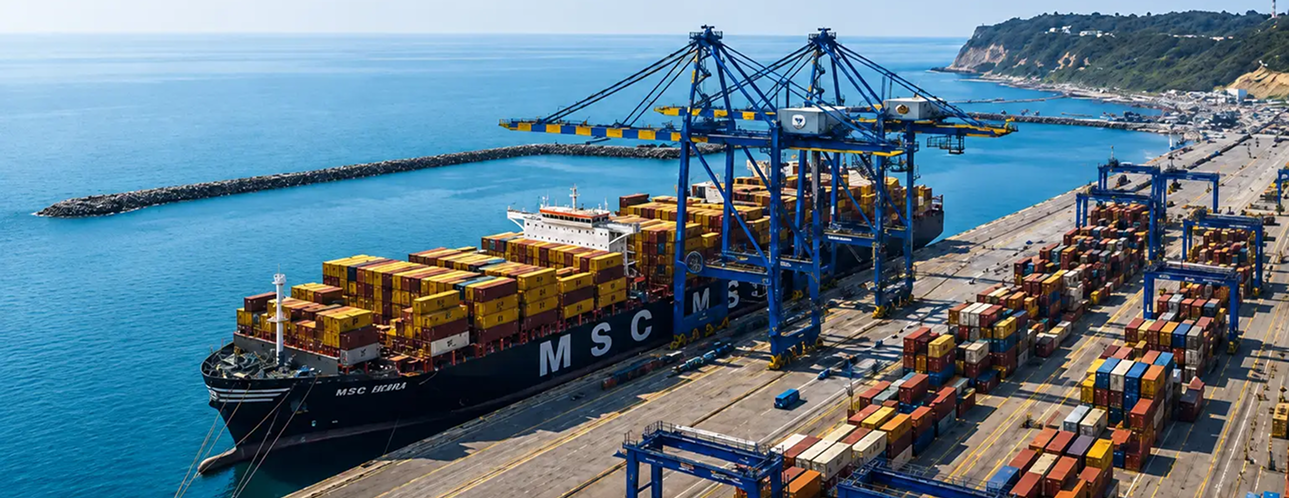


When Mediterranean Shipping Company (MSC) announced a $1.4 billion investment for a 49% stake in Adani Vizhinjam Port, most of the headlines focused on the size of the deal.
It is the largest foreign investment in India's port sector to date.
But the investment itself is not the real story.
The more important question is why the world's largest container carrier chose to deepen its commitment to a port that only began commercial operations in late 2024.
The answer offers a glimpse into how India–U.S. shipping networks may evolve over the coming years.
Vizhinjam was never designed to compete with Indian ports. It was designed to compete with ports outside India.
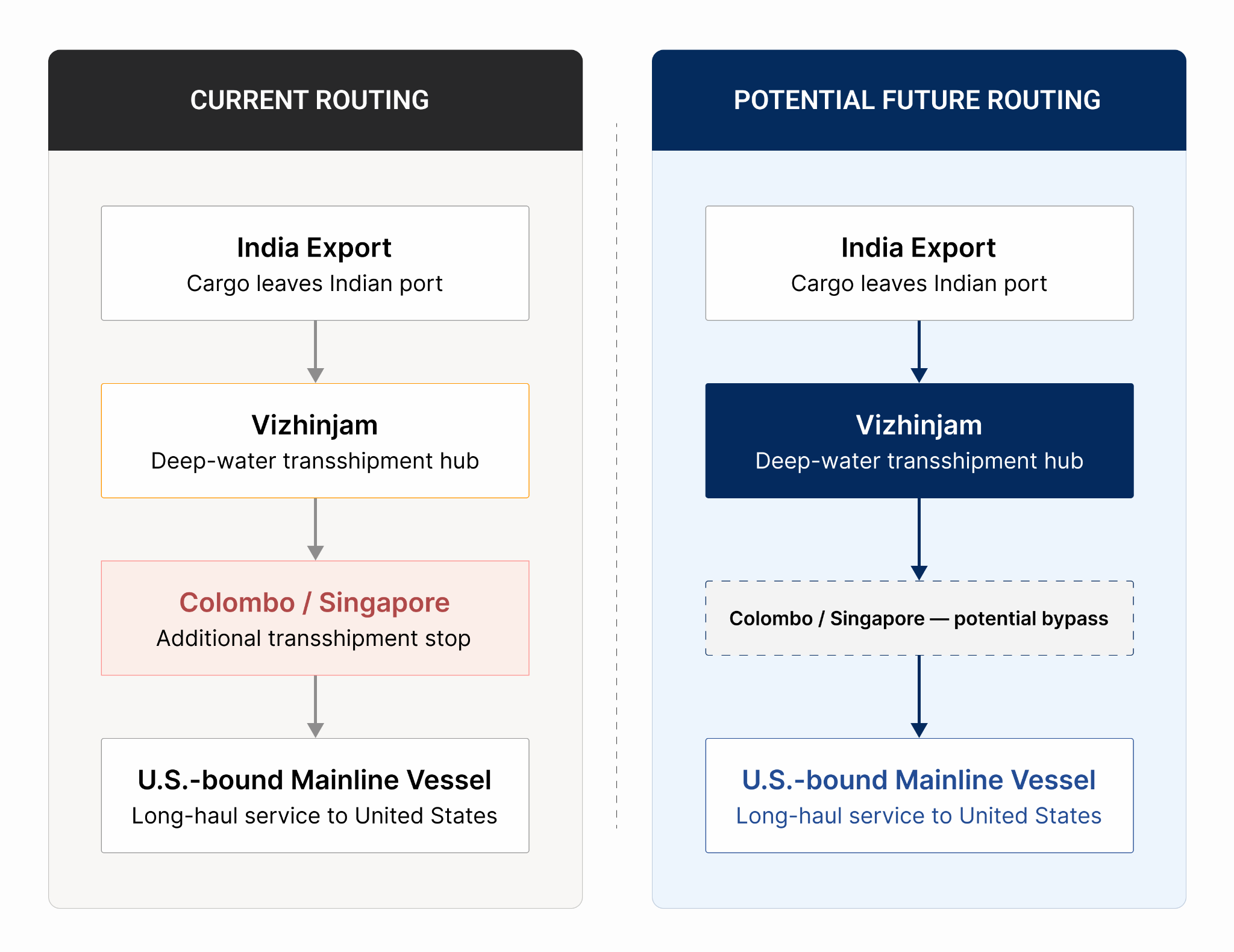
A significant share of India's export containers heading to the United States is still transshipped through regional hubs such as Colombo and Singapore before joining long-haul services.
Every additional transshipment introduces another operational step into the journey. It increases the possibility of missed connections, schedule changes, equipment shortages and delays.
Vizhinjam was built with a different objective.
Its deep natural draft allows it to accommodate the world's largest container vessels, creating an opportunity to keep more transshipment activity within India instead of routing cargo through overseas hubs.
That ambition has been central to the project from the beginning.
Why MSC's investment matters
Ocean carriers have been investing in terminal infrastructure for years.
MSC, CMA CGM and Hapag-Lloyd have all expanded their global terminal portfolios as they seek greater control over their supply chains.
Owning or co-owning terminal infrastructure gives carriers greater influence over berth availability, operational planning and long-term network development.
MSC's investment in Vizhinjam fits squarely within that strategy.
Rather than simply calling at the port, MSC is becoming part of the infrastructure supporting its future network.
The timing is equally significant.
According to Adani Ports, Vizhinjam handled 1.3 million TEUs during fiscal year 2025–26, effectively reaching the limits of its Phase 1 capacity within its first full year of operations. The port also crossed 2 million TEUs in cumulative throughput within just 18 months of commercial operations—an unprecedented milestone for an Indian port.
With Phase 2 expected to increase annual capacity to nearly 6 million TEUs by the end of 2028, the investment is supporting expansion that is already operationally necessary rather than speculative.
What does this mean for India–U.S. trade?
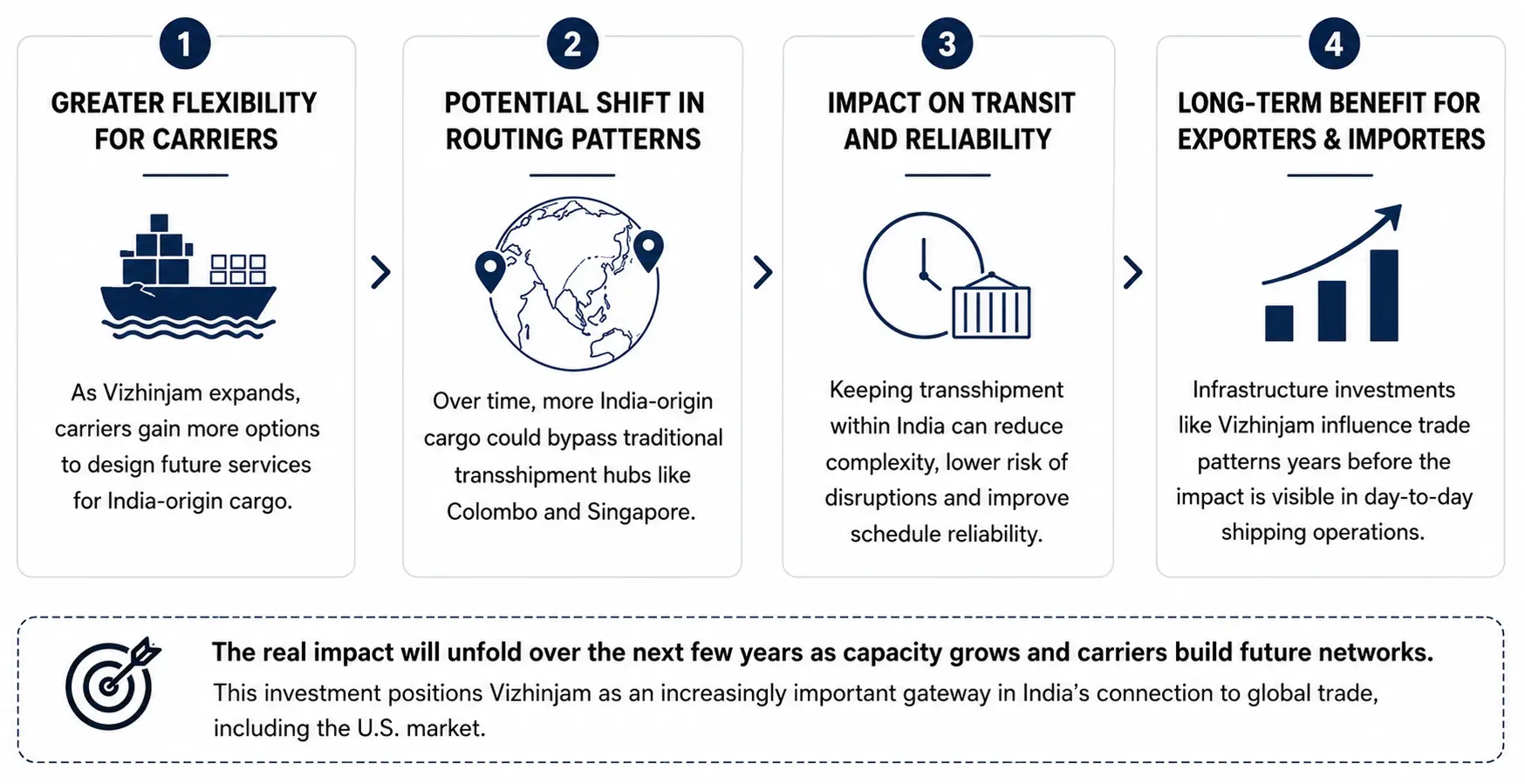
It would be premature to conclude that India–U.S. services will immediately shift to Vizhinjam or that existing routing patterns will change overnight.
Shipping networks evolve gradually.
Service rotations depend on cargo volumes, customer demand, vessel deployment and commercial priorities.
What this investment does indicate is that Vizhinjam is becoming increasingly important in the long-term planning of one of the world's largest container carriers.
As the port expands, carriers will gain greater flexibility when designing future service networks serving India-origin cargo.
For exporters and importers, infrastructure investments like these often influence trade patterns years before the effects become visible in day-to-day shipping operations.
The bigger trend
MSC's investment is also part of a much broader shift taking place across the container shipping industry.
Large carriers are no longer investing only in ships.
Increasingly, they are investing across the logistics ecosystem—ports, terminals, inland transportation, warehousing and digital platforms.
Infrastructure has become a competitive advantage.
Owning key parts of the supply chain gives carriers greater operational control, improves resilience and reduces dependence on third-party facilities.
MSC's investment in Vizhinjam is one example of this wider strategy.
What Airlift is Watching
Rather than focusing only on today's announcement, the more important developments will come over the next few years.
We'll be watching:
Whether additional mainline services begin calling at Vizhinjam.
Whether more India-origin cargo gradually bypasses traditional transshipment hubs such as Colombo and Singapore.
How quickly Phase 2 expansion progresses toward its planned capacity.
Whether other global carriers deepen their own infrastructure investments in India.
These developments are unlikely to transform shipping overnight.
But together they have the potential to reshape how India connects with global trade over the next decade.
The takeaway
Port investments rarely change freight rates the next morning.
They rarely change transit times the following month.
What they do change is where carriers choose to build future networks.
MSC's investment in Vizhinjam is less about today's shipment and more about tomorrow's shipping map.
For companies moving cargo between India and the United States, that makes it one of the most significant infrastructure announcements in India's container shipping sector this year.