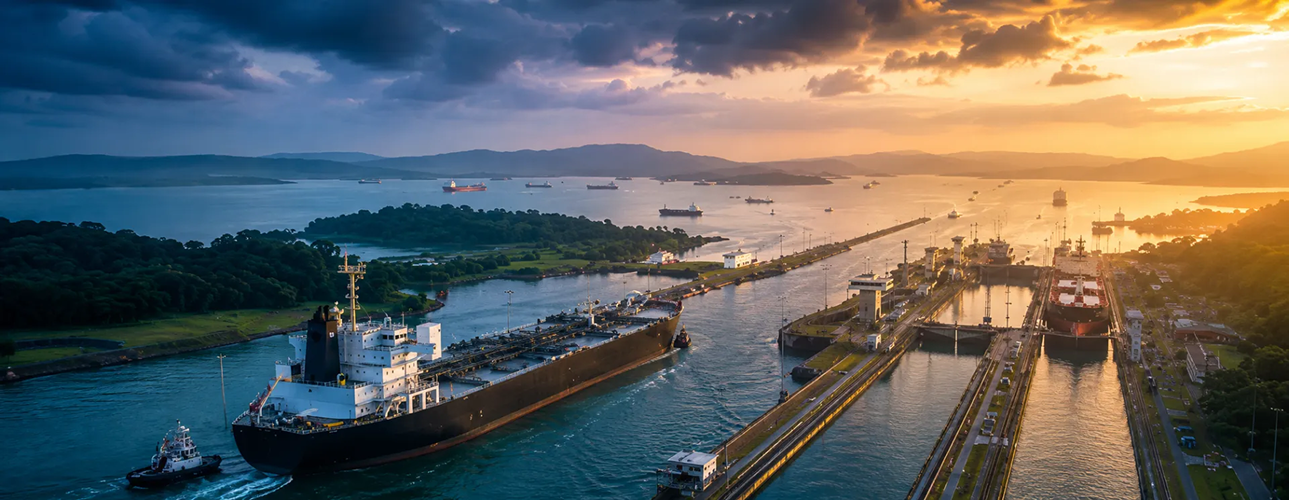


In April, a tanker paid a record $4 million for a single transit slot through the Panama Canal.
The vessel wasn't escaping a disruption in Panama. It was responding to one thousands of miles away.
A normal Panama Canal reservation typically costs between $15,000 and $100,000, depending on vessel size. Yet this shipper paid forty to two hundred times that amount for access to a waterway that wasn't the source of the problem.
The story begins in the Persian Gulf.
What happened at Hormuz
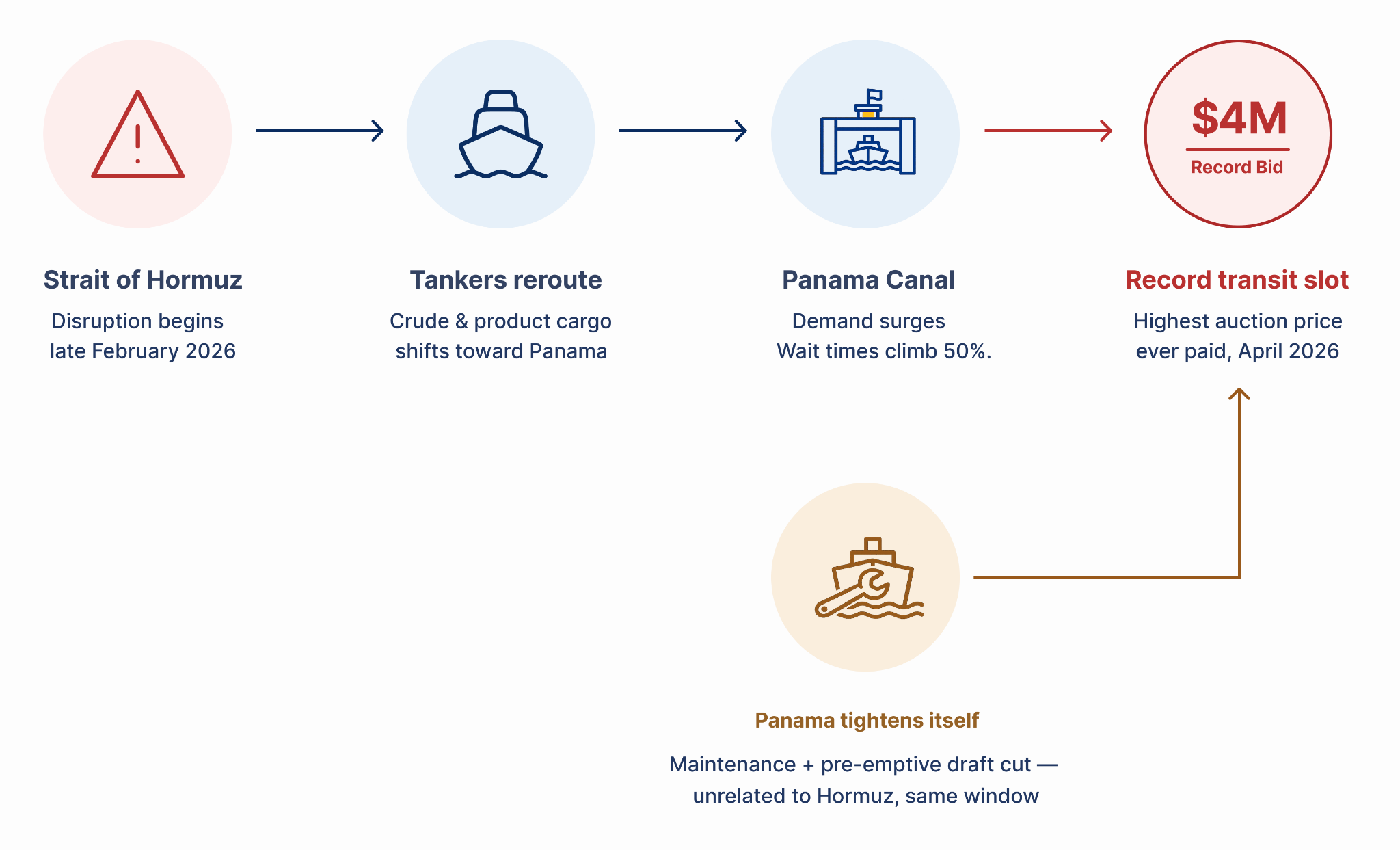
In late February 2026, conflict involving the United States, Israel, and Iran disrupted shipping through the Strait of Hormuz, one of the world's most important energy chokepoints.
A substantial share of global seaborne oil and LNG normally passes through the narrow channel. As tensions escalated, tanker traffic fell sharply. Although a ceasefire in April eased the immediate military situation, shipping networks had already begun adapting to the disruption.
That adaptation is where the story becomes interesting.
The most important supply chain disruptions are often not the direct effects of a crisis. They emerge from the way cargo flows reorganize themselves afterward.
Where the cargo actually went
Oil cargoes did not simply wait for conditions to normalize.
Instead, many crude oil and refined product shipments were rerouted through alternative trade lanes. One of the biggest beneficiaries was the Panama Canal.
According to BIMCO, vessel transits through Panama increased 16% year-over-year during a five-week period this spring. Average waiting times climbed 50% year-over-year, reaching approximately 47 hours. Auction prices for unreserved transit slots, which had been trading around $135,000–$140,000 before the Hormuz disruption, rose to roughly $385,000–$425,000, with extreme cases reaching the record $4 million level.
The economics are straightforward.
When Gulf export routes become constrained, shipowners search for the next-best path to move cargo from the U.S. Gulf Coast and Atlantic Basin into Asian markets. For many tankers, the Panama Canal remains the shortest water route available.
Using Panama can save approximately 18 days compared with sailing around the Cape of Good Hope.
Eighteen days at sea is expensive. For some cargoes, even a multimillion-dollar auction slot can be justified.
But not every cargo segment responded the same way.
Why LNG behaved differently
LNG carriers largely chose a different path.
Panama LNG transits remain roughly 73% below pre-drought norms, even with canal capacity available and oil tankers paying record prices to move through the system.
The difference comes down to incentives.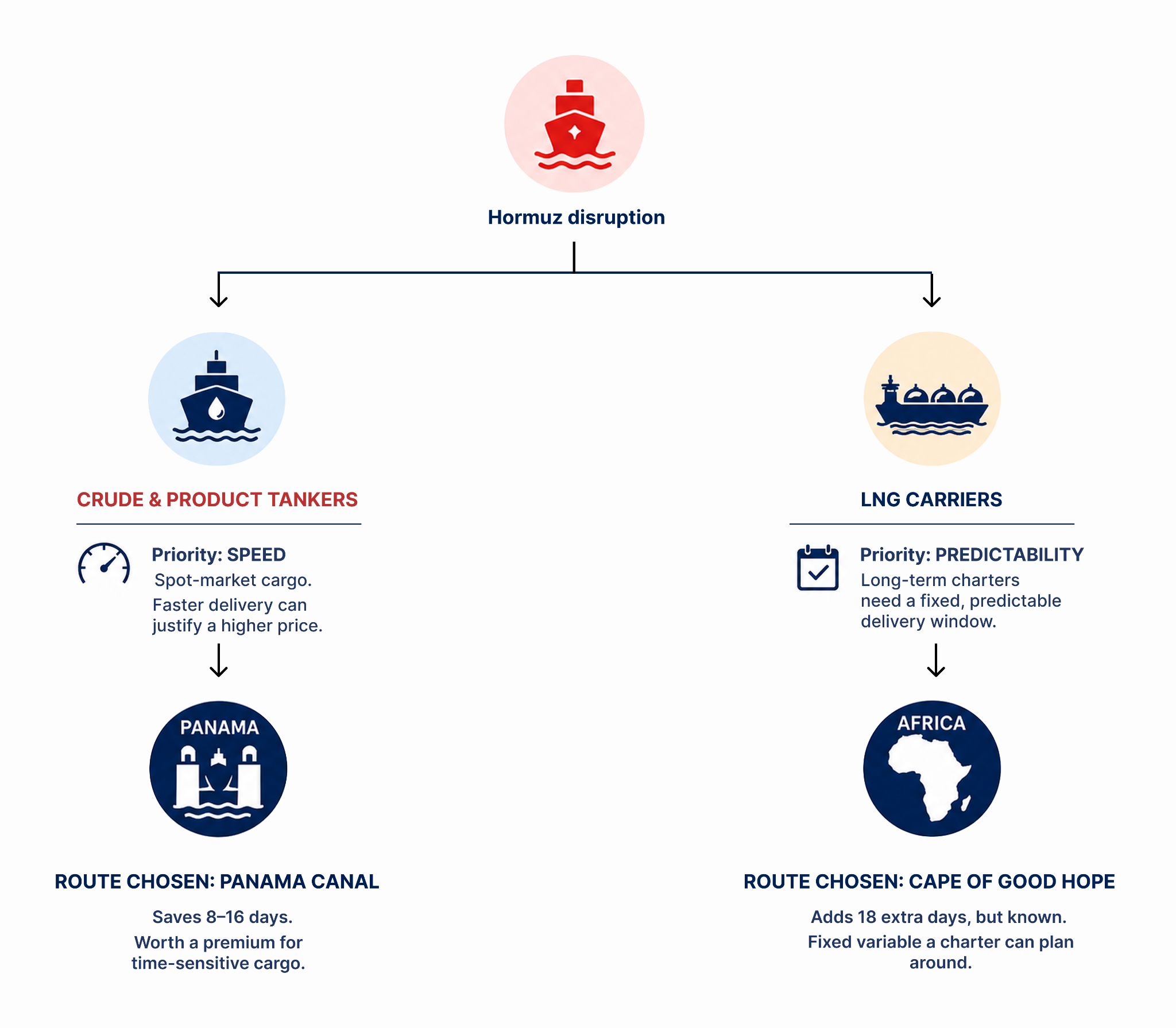
Most oil tankers operate in markets where faster delivery can justify significantly higher transportation costs. LNG carriers, by contrast, are frequently employed under long-term charter agreements that prioritize schedule reliability over transit speed.
For an LNG charterer, an additional 18 days around the Cape of Good Hope is a known planning variable. It can be incorporated into schedules months in advance.
A Panama auction slot cannot.
Its price changes daily. Availability is uncertain. Transit timing may depend on market conditions that are impossible to predict months ahead.
For operators whose contracts depend on delivery certainty, the slower route is often the lower-risk route.
The result was a striking divergence: two cargo types facing the same disruption, making two different routing decisions.
Panama's own constraint, layered on top
At this point, the story could be told as a simple rerouting narrative.
It isn't.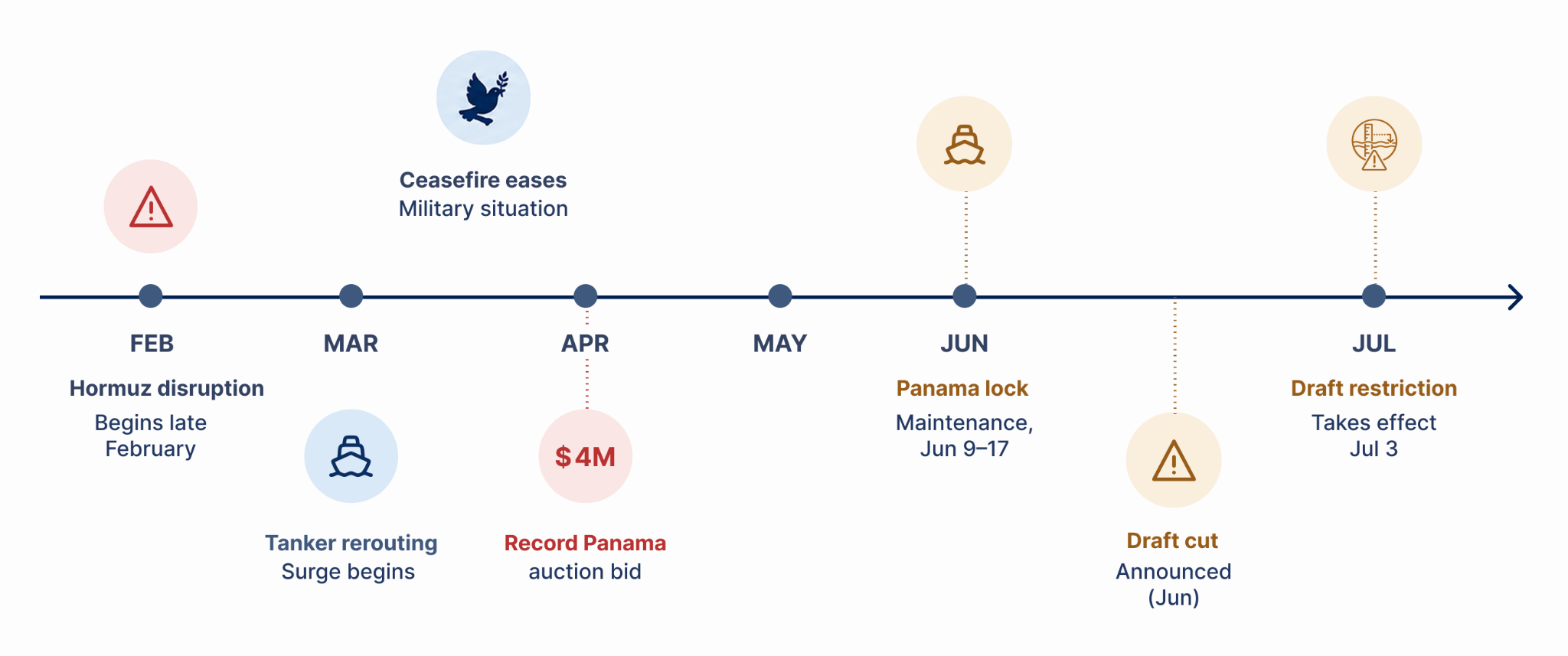
While oil tankers were bidding record amounts to access the canal, Panama was simultaneously managing constraints entirely unrelated to Hormuz.
This is what makes the situation especially important for supply chain planners.
Panama's reservoirs are not currently experiencing drought conditions. In fact, Gatun Lake reached near-maximum capacity in early 2026, a dramatic reversal from the severe water shortages that affected canal operations during 2023 and 2024.
Yet the Panama Canal Authority announced that it would reduce the maximum authorized draft for Neopanamax vessels to 49.5 feet beginning July 3, 2026.
The reason was precautionary.
Meteorological forecasts indicated the possibility of El Niño conditions developing later in the year, potentially affecting water availability during the next dry season.
The canal is not responding to a problem it has.
It is responding to a problem it might have months from now.
At nearly the same time, scheduled maintenance on the canal's Panamax locks temporarily reduced daily transit capacity during a period when rerouting demand was already elevated.
None of these events were caused by Hormuz.
All of them affected the same transportation network at the same moment.
When chokepoints start interacting
A disruption at one chokepoint rarely remains confined to that chokepoint.
Cargo shifts toward alternative routes. Those routes absorb demand unevenly. Different cargo types make different tradeoffs based on their commercial requirements. And the alternative corridors are often dealing with operational constraints of their own.
That is exactly what happened here.
The Strait of Hormuz disruption increased demand for Panama Canal capacity. The Panama Canal, meanwhile, was managing maintenance schedules and future water-risk planning that had nothing to do with events in the Persian Gulf.
Viewed independently, each development appears manageable.
Viewed together, they create a very different risk profile.
For importers, exporters, and logistics planners, the lesson is straightforward: a backup route is not a neutral fallback option.
It has its own constraints, maintenance schedules, environmental risks, and operational decisions. Those factors can become material precisely when demand is shifting toward them.
Treating "we'll reroute through Panama" as a contingency plan only works if Panama itself is being monitored with the same rigor as the disruption you're trying to avoid.
Supply chains that model chokepoints independently are underpricing their actual exposure.
The risk is not that one corridor closes.
The risk is that the corridor you turn to next is already managing a disruption of its own.