

A significant compliance deadline is approaching for importers of regulated consumer products entering the United States.
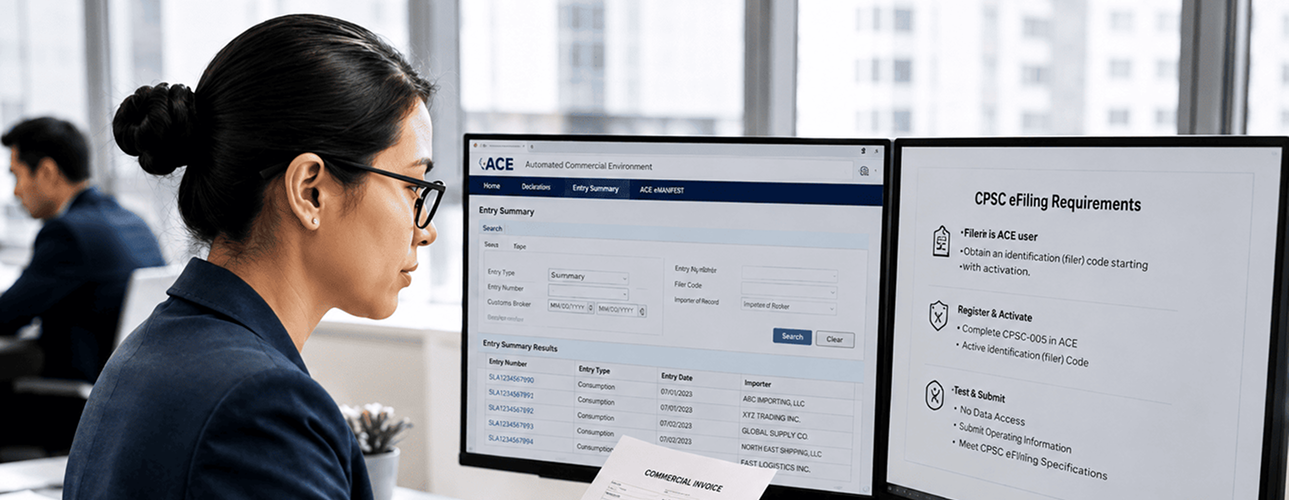
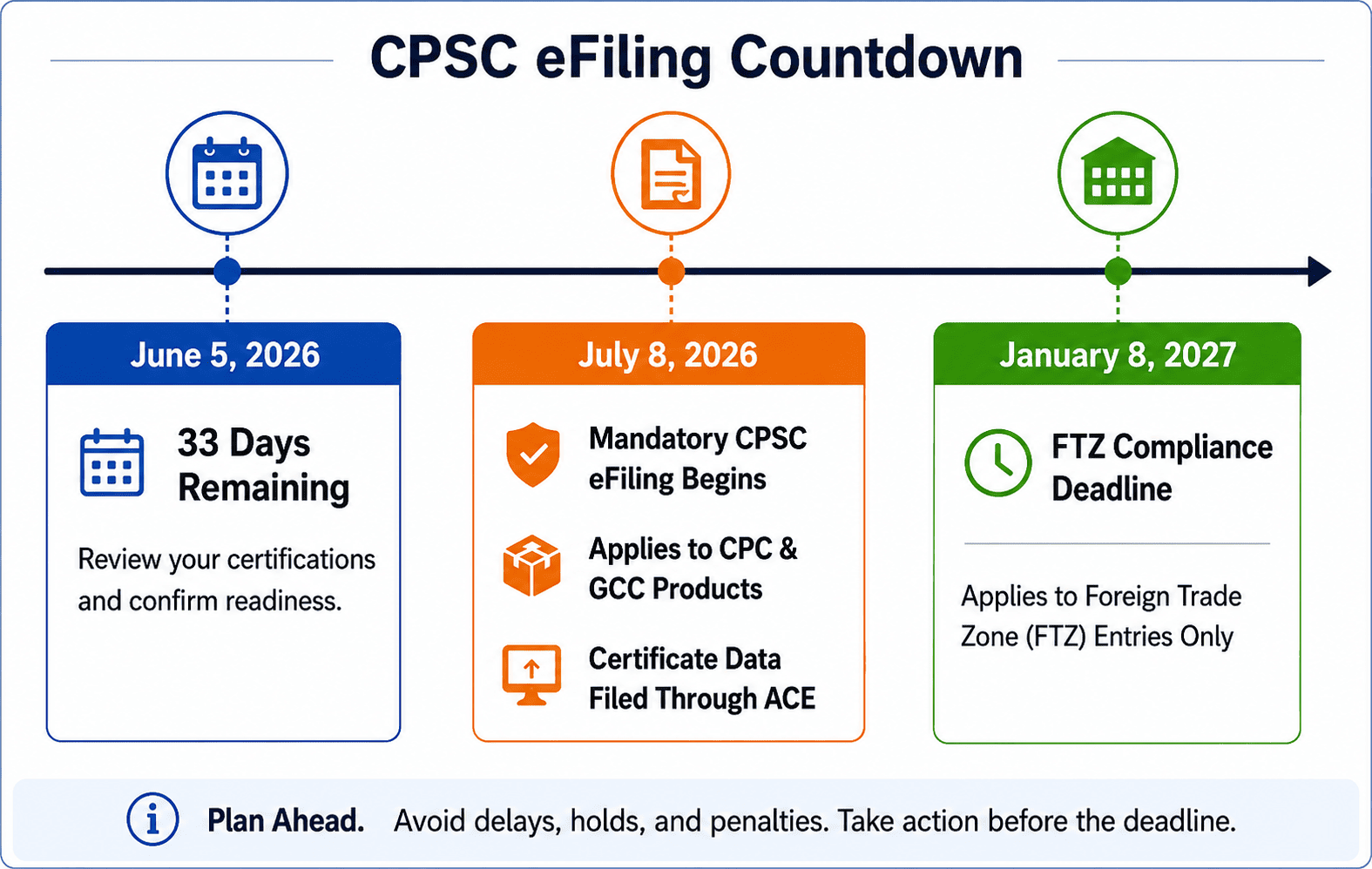
Beginning July 8, 2026, the U.S. Consumer Product Safety Commission (CPSC) will require mandatory electronic filing (eFiling) of product safety certificate data through U.S. Customs and Border Protection's Automated Commercial Environment (ACE).
While the underlying certification requirements are not new, the way compliance information is transmitted to regulators is changing. Importers that fail to prepare may face shipment delays, increased costs, enforcement actions, and potential disruptions to their supply chains.
With the deadline approaching, now is the time to review your compliance readiness.
What Is Changing on July 8?
The CPSC's eFiling program requires importers to electronically transmit product certificate data at the time of entry through ACE.
The requirement applies to products that require either:
A Children's Product Certificate (CPC)
A General Certificate of Conformity (GCC)
Historically, importers were required to maintain these certificates and provide them when requested. Under eFiling, key certificate data must be transmitted electronically as part of the import entry process.
What changes is the transmission method.
What does not change is the responsibility to ensure products comply with all applicable CPSC safety requirements.
Which Products Are Affected?
The requirement applies broadly across regulated consumer goods entering the United States.
Examples may include:
Toys and children's products
Consumer electronics
Furniture and home furnishings
Apparel and textiles
Sporting goods
Household products subject to CPSC regulations
Importers should review their product portfolio carefully to determine which products require certification and whether a CPC or GCC applies.
CPC vs. GCC: Understanding the Difference
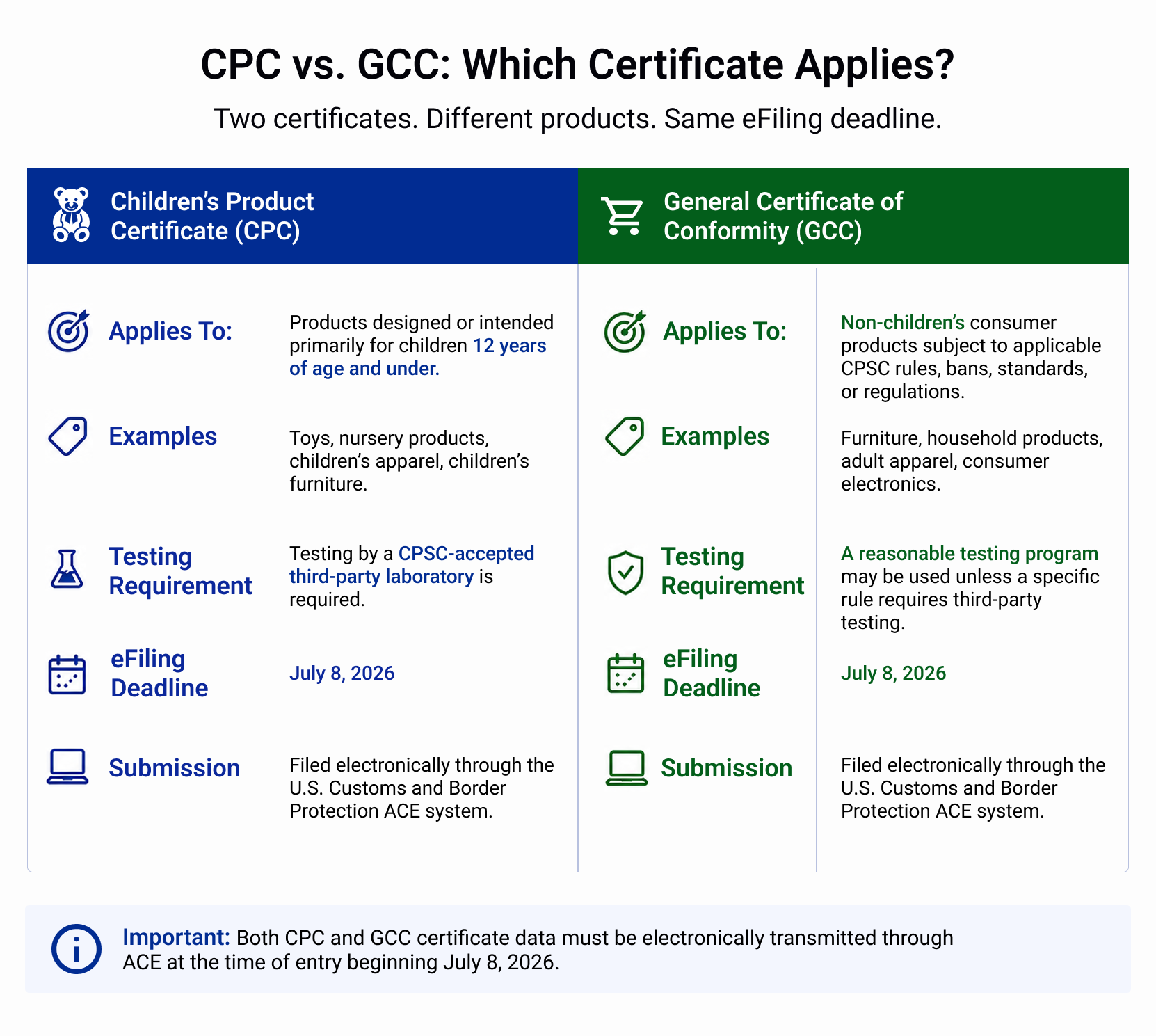
Children's Product Certificate (CPC)
A CPC is required for products designed or intended primarily for children 12 years of age or younger.
Examples include:
Toys
Children's apparel
Nursery products
Children's furniture
For CPCs, testing must be performed by a CPSC-accepted third-party laboratory before certification can be issued.
General Certificate of Conformity (GCC)
A GCC applies to non-children's consumer products that are subject to applicable CPSC rules, bans, standards, or regulations.
Examples may include:
Adult apparel
Furniture
Household products
Certain consumer electronics
For GCCs, manufacturers and importers may generally rely on a reasonable testing program unless a specific regulation requires third-party testing.
Determining the correct certificate type is one of the most important steps in preparing for eFiling compliance
Three Actions Importers Should Take Before July 8
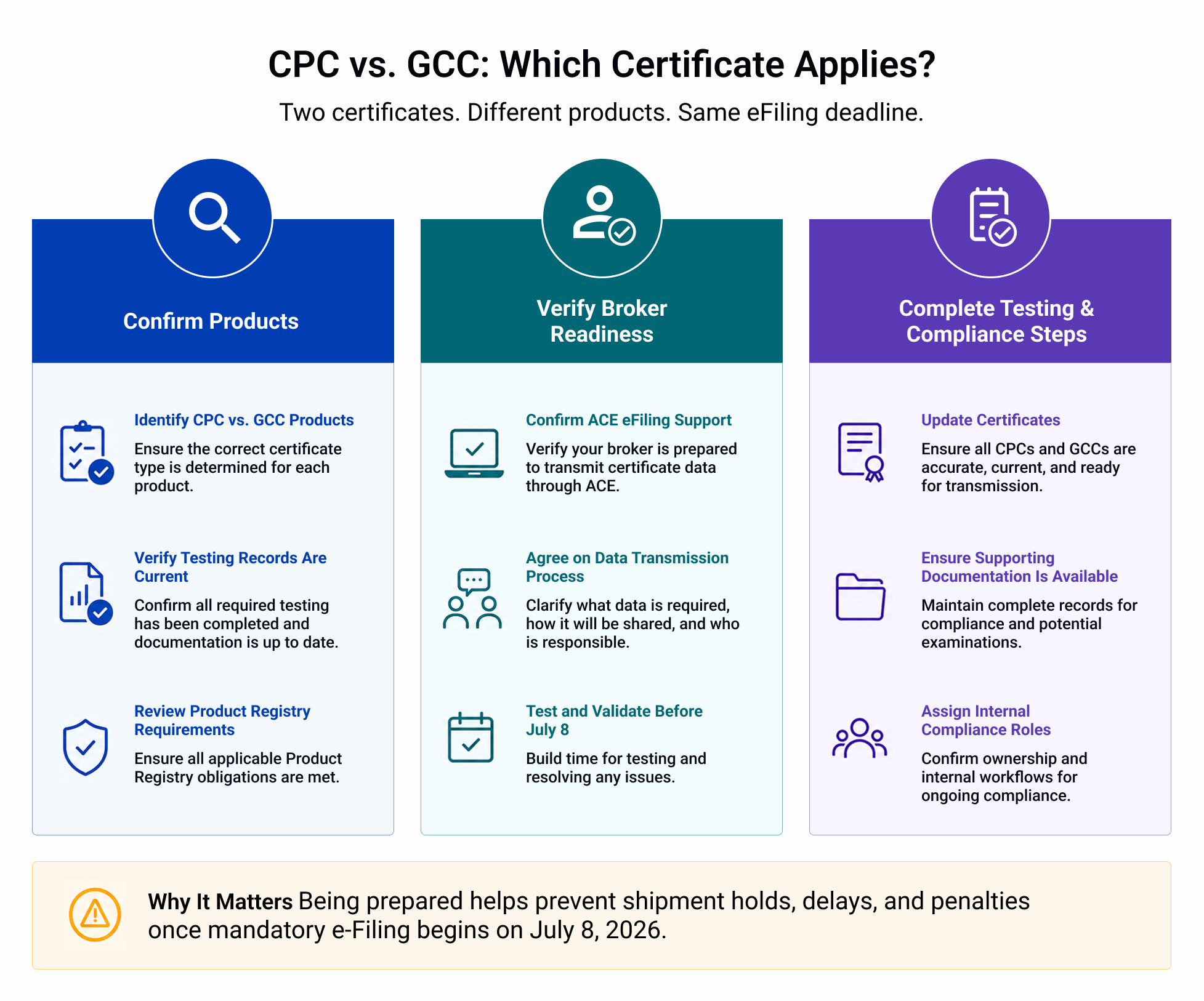
1. Confirm Which Products Require Certification
Many companies already maintain compliance documentation, but not all organizations have reviewed whether their certificates are complete, current, and ready for electronic transmission.
Importers should verify:
Which products require CPCs
Which products require GCCs
Whether testing records remain current
Whether certificate information is accurate and readily accessible
2. Verify Customs Broker Readiness
The success of eFiling depends on accurate data transmission through ACE.
Importers should speak with their customs broker now and confirm:
Their readiness to support CPSC eFiling
What certificate data will be required
How information will be collected and maintained
Whether any process changes are needed before July 8
Waiting until shipments are already in transit can create unnecessary risk.
3. Complete Testing and Product Registry Requirements
Importers should review any applicable testing, certification, and Product Registry requirements well before the deadline.
This includes confirming:
Required testing has been completed
Certificates are up to date
Supporting documentation is available
Internal compliance responsibilities are clearly defined
Early preparation reduces the likelihood of shipment disruptions during implementation.
What Happens If You're Not Ready?
The most immediate consequences are operational.
Incomplete, inaccurate, or missing certificate information may result in:
Cargo holds
Customs examinations
Delayed release of goods
Storage, detention, and demurrage costs
Refused entry in certain circumstances
There may also be enforcement consequences.
Under current CPSC authority, civil penalties can reach up to $120,500 per violation, subject to statutory limitations and enforcement considerations.
CPSC has also stated that incomplete or inaccurate eFiling data alone — even without an underlying product safety violation — can result in shipment holds and examinations.
For importers managing high-volume consumer goods programs, preparation is significantly less expensive than remediation.
Special Considerations for Foreign Trade Zone Users
The implementation timeline is different for Foreign Trade Zone (FTZ) entries.
For products admitted into FTZs, mandatory compliance begins January 8, 2027.
Although that deadline provides additional time, importers should avoid delaying implementation efforts. Early preparation allows organizations to identify process gaps, coordinate with brokers, and establish reliable compliance workflows before the requirement becomes mandatory.
Frequently Asked Questions
Is this a new certification requirement?
No. Product certification requirements remain unchanged. The new requirement concerns the electronic transmission of certificate data through ACE.
Does every imported product require eFiling?
No. The requirement applies only to products that require a Children's Product Certificate or General Certificate of Conformity under applicable CPSC regulations.
Can my customs broker file the information for me?
In many cases, customs brokers will transmit certificate data through ACE. However, importers remain responsible for ensuring the information provided is accurate and complete.
What should importers do first?
Begin by identifying which products require CPCs or GCCs, then confirm your customs broker's readiness to support electronic filing before the July 8 deadline.
The Bottom Line
The July 8, 2026 CPSC eFiling deadline represents an important operational change for importers of regulated consumer products.
Organizations that prepare now can minimize disruption, maintain cargo flow, and reduce compliance risk. Those that wait until shipments are already moving may face avoidable delays, additional costs, and enforcement exposure.
If your company imports regulated consumer goods into the United States, now is the time to review your certification processes, coordinate with your customs broker, and ensure you are ready for mandatory electronic filing.
Sources: CPSC eFiling Final Rule (16 CFR Part 1110; Federal Register 86 FR 10354) and official CPSC eFiling guidance available at cpsc.gov/efiling.